 Termite Registry
identification
Termite Nest: Where Each Kind Lives in a House
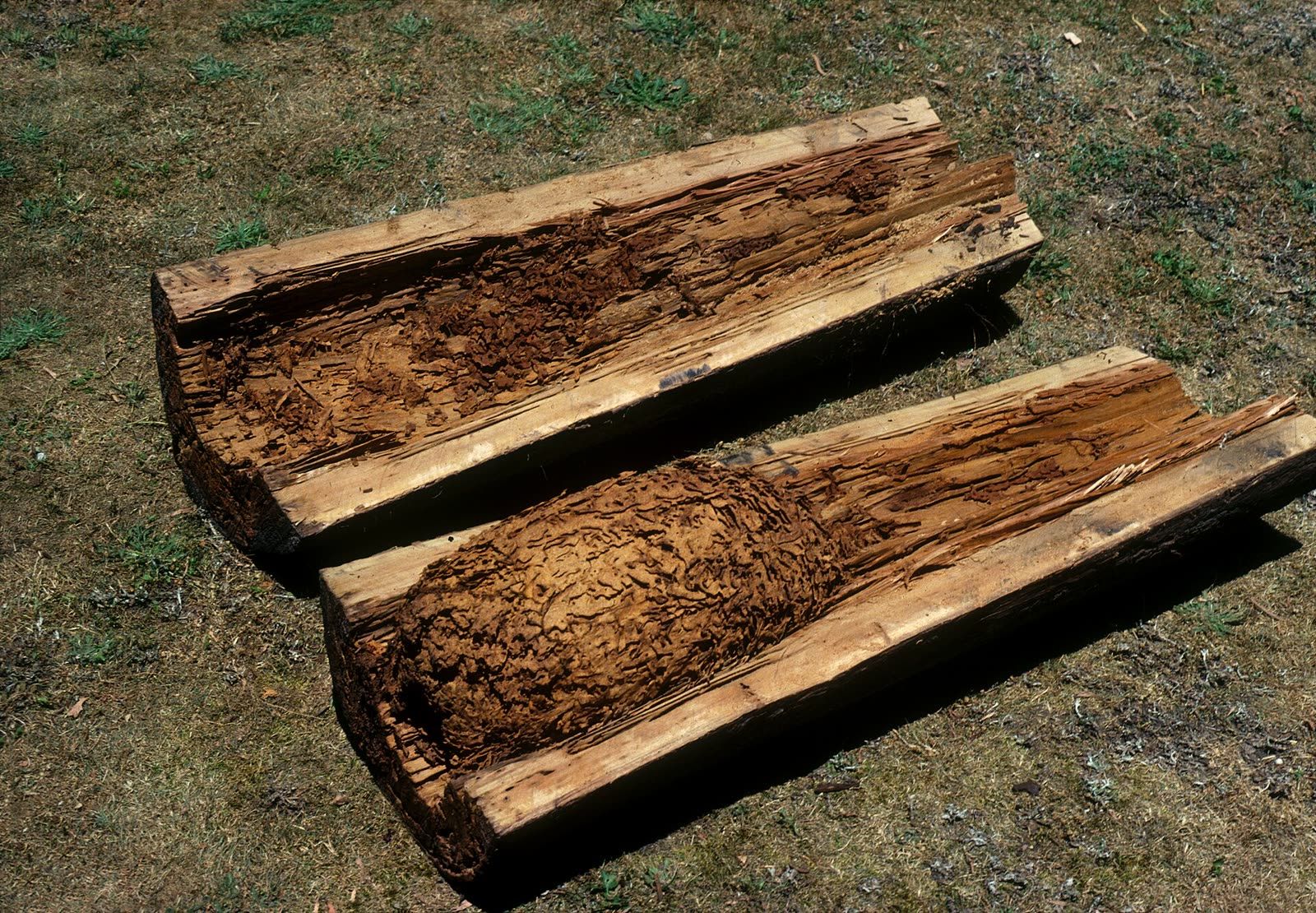

The termites that infest US houses do not build mounds. A subterranean colony nests in the soil, usually outside or under the house, and a drywood colony lives inside the wood it eats, so the nest is almost never something you will see. Which group you have decides where the nest is and how a treatment reaches it.
What is a termite nest?
A termite nest is the protective core of a termite colony where the royal pair stays, eggs hatch, and young termites mature. It serves as the main base for the population, but its structure varies completely based on whether the insects require soil moisture or live entirely inside dry timber.
In the United States, homeowners rarely encounter an actual nest. Subterranean species keep their nest in the soil, while drywood species live inside galleries, the hollowed tunnels termites carve inside structural wood. Because these spaces stay hidden, the signs you spot on drywall or foundation walls are usually feeding paths rather than the nest itself.
Where do termites nest?
Termites nest in the soil, inside structural timber, or within moist wall voids depending on their species group.
| Group | Where the nest is | How it reaches your wood | Read next |
|---|---|---|---|
| Subterranean | In the soil, near or below ground level, often outside the house | Workers travel to the wood through the soil and through mud tubes | subterranean termites |
| Formosan | A central nest underground, and sometimes a carton nest inside a wall, roof space or other void where water collects | Through the soil and mud tubes, and directly from an above-ground nest | Formosan termites |
| Drywood | Inside the infested piece of wood itself, with no soil contact | The colony lives in the wood it eats | drywood termites |
UF/IFAS notes that native subterranean termites start a colony when a male and female pair forms a royal chamber in a moist site near wood, where the termite queen begins laying eggs. For Formosan termites, UF/IFAS says colonies are usually underground, with a central nest that holds the king and queen and a large part of the colony, including the eggs and larvae.
What does a termite nest look like?
A subterranean termite nest looks like an unseen, branching system of soil pockets, while a drywood nest is a network of smooth tunnels carved inside wood.
A native subterranean nest is a hidden network of chambers and tunnels in the soil. Nobody digs up a lawn to look at one, and it has no outer shell to find.
Formosan subterranean termites are different because they can build secondary structures inside buildings. UF/IFAS notes that Formosans fill voids with carton nest, a blend of soil, wood pulp, termite saliva, and termite feces. In a home, carton appears as a dark, layered, spongy material packed tightly inside walls or roof spaces. Finding carton inside a wall means part of the colony has a water source inside the building.
For drywood termites, Arizona Extension AZ1232 reports that the interior of infested wood contains chambers connected by galleries that cut across the wood grain, showing a smooth, sculptured appearance. For a drywood colony, these hollowed galleries inside the board are the nest.
Do termites build mounds in the US?
No, the termites that infest US homes do not build mounds.
The tall, chimney-like mounds seen in nature documentaries are built by termite species native to Africa, Asia, and Australia. None of the termites that infest US houses builds one. If you see a mound of soil in your yard or garden, it is far more likely to be ants.
How big is a termite colony?
A subterranean colony can number in the hundreds of thousands, and one house can have several colonies around it.
UF/IFAS states that a single colony of subterranean termites, especially the eastern subterranean termite, may hold 100,000 to 1,000,000 termites and forage up to 150 feet for food. UF/IFAS also notes that a new subterranean colony may take five to 10 years to mature enough to produce swarmers. For West Indian drywood termites, UF/IFAS reports that winged swarmers do not appear until the colony reaches about five years of age.
A single property is rarely limited to one nest. UC IPM points out that several colonies of the same or different species can infest a single building. A California Structural Pest Control Board bait study used DNA analysis to show that many research sites held three to five separate colonies, and one site held 15. So a house can have more than one nest, and there may be no single nest to find.
Can you find the termite nest in your house?
You will almost never find the actual termite nest in a house, and that is normal.
UF/IFAS explains that structural infestations by subterranean termites are usually not readily visible, and that damage may be seen during remodeling or once shelter tubes appear. UC IPM notes that working tubes run from the nest in the soil to the wood, and may climb concrete or stone foundations.
Instead of the nest, homeowners usually find signs of the colony at work:
- Mud lines on foundation walls, which are mud tubes running between the soil and the wood.
- Small piles of hard pellets below infested wood, which are drywood droppings pushed out of the galleries.
- Shed wings on windowsills, or a swarm of flying termites indoors.
For drywood species, UF/IFAS notes that the infestation usually stays within the wood. The outside signs are blistering or peeling of thin surface wood or paint, and pellets pushed out of kick-out holes.
If you find a nest in a wall void, it might not be termites at all. Penn State Extension notes that carpenter ants usually build nests in hollow areas of ceilings, walls, or floors rather than excavating wood directly.
How do you get rid of a termite nest?
You get rid of a termite nest by applying a colony-level treatment rather than searching for the physical nest structure.
UC IPM explains that “subterranean termites in structures cannot be controlled using techniques that are appropriate for drywood termites, such as fumigation, heat treatment, freezing, and termite electrocution devices, because the reproductives and a large majority of the termites are concentrated in nests near or below ground level out of reach of these control methods.” The California Structural Pest Control Board says subterranean termites require separate treatments to create a barrier between the structure and their nest in the ground.
The treatment has to match the termite group:
- Subterranean and Formosan termites are treated through the soil with a liquid treatment, or with bait systems whose bait the workers carry back to the colony.
- A Formosan carton nest inside a wall also has to be found, removed, and its water source fixed.
- Drywood termites are treated with whole-house fumigation or heat, or with a local treatment when the colony’s location is known.
Digging up soil in the yard or spraying a mud tube with a household insecticide reaches only the termites it touches. The queen keeps laying eggs out of reach. My guide on how to get rid of termites walks through the choice for each group.
What should you do if you suspect a termite nest?
If you suspect termite activity, leave the surrounding building materials alone and schedule a professional inspection.
I have not seen your house, so I cannot tell you what you have. Here is what I would do:
- Do not dig for the nest in your yard or break open wall voids searching for insects.
- Note every spot where you noticed mud tubes, wing sheds, or pellet piles, and take clear photos.
- If you cut into a wall during a renovation and find soft, dark, layered material, leave it in place and say so when you book.
- Book a formal termite inspection with a licensed operator and ask them specifically how their proposed method will reach the colony underground or inside the timber.
Sources
- Native Subterranean Termites: Reticulitermes flavipes, R. virginicus, R. hageni (EENY-212) — University of Florida IFAS Extension, Featured Creatures, undated. Accessed 2026-10-14.
- Formosan Subterranean Termite, Coptotermes formosanus Shiraki (EENY-121) — University of Florida IFAS Extension, Featured Creatures, undated. Accessed 2026-10-14.
- West Indian Drywood Termite, Cryptotermes brevis (EENY-079) — University of Florida IFAS Extension, Featured Creatures, undated. Accessed 2026-10-14.
- Drywood Termites (AZ1232) — University of Arizona Cooperative Extension — Dawn H. Gouge, Carl Olson, Paul Baker, 2009-05. Accessed 2026-10-14.
- Pest Notes: Subterranean and Other Termites (Publication 7415) — UC Statewide IPM Program, 2014-05. Accessed 2026-10-14.
- Evaluation of bait station system efficacy for reduced-risk subterranean termite management in CA — California Structural Pest Control Board — Andrew Sutherland and Siavash Taravati, UC Cooperative Extension, 2022-08-31. Accessed 2026-10-14.
- Fumigation — California Structural Pest Control Board, 2019-03. Accessed 2026-10-14.
- Carpenter Ants — Penn State Extension, 2026-06-24. Accessed 2026-10-14.
Common questions
Do termites build mounds in the United States?
No. The large mounds in photos are built by African, Asian and Australian species. Subterranean termites in the US nest in the soil, and drywood termites live inside the wood they eat.
Should I dig up a termite nest in my yard?
No. A subterranean colony is a network spread through the soil, often with more than one colony around one house, and digging reaches only the termites you disturb. Treatments that end a colony work through the workers or through the soil around the house.
Is a termite nest inside my wall?
For subterranean and drywood termites, usually not in the sense of a separate structure: subterranean colonies nest in the soil, and drywood colonies live in the wood itself. Formosan termites can build a carton nest inside a wall where there is water. Carpenter ants also nest in wall voids.
- termite nest
- termite colony
- termite mounds
- identification
Related reading
How you get rid of termites depends on which kind you have. Subterranean termites live in the soil and require soil barriers or baits, while drywood termites live inside wood and are treated in the…
identification
Termite Mud Tubes: What They Are and What to Do
A termite mud tube, or shelter tube, is a covered runway of hardened earth that subterranean termites build so they can travel between the soil they live in and the wood they are eating.
identification
Termite Queen: What She Is and Where She Hides
A termite queen is the egg-layer that founds a colony with a king after a swarm flight, staying sealed in soil or wood for life.