 Termite Registry
Formosan Termites
Coptotermes formosanus
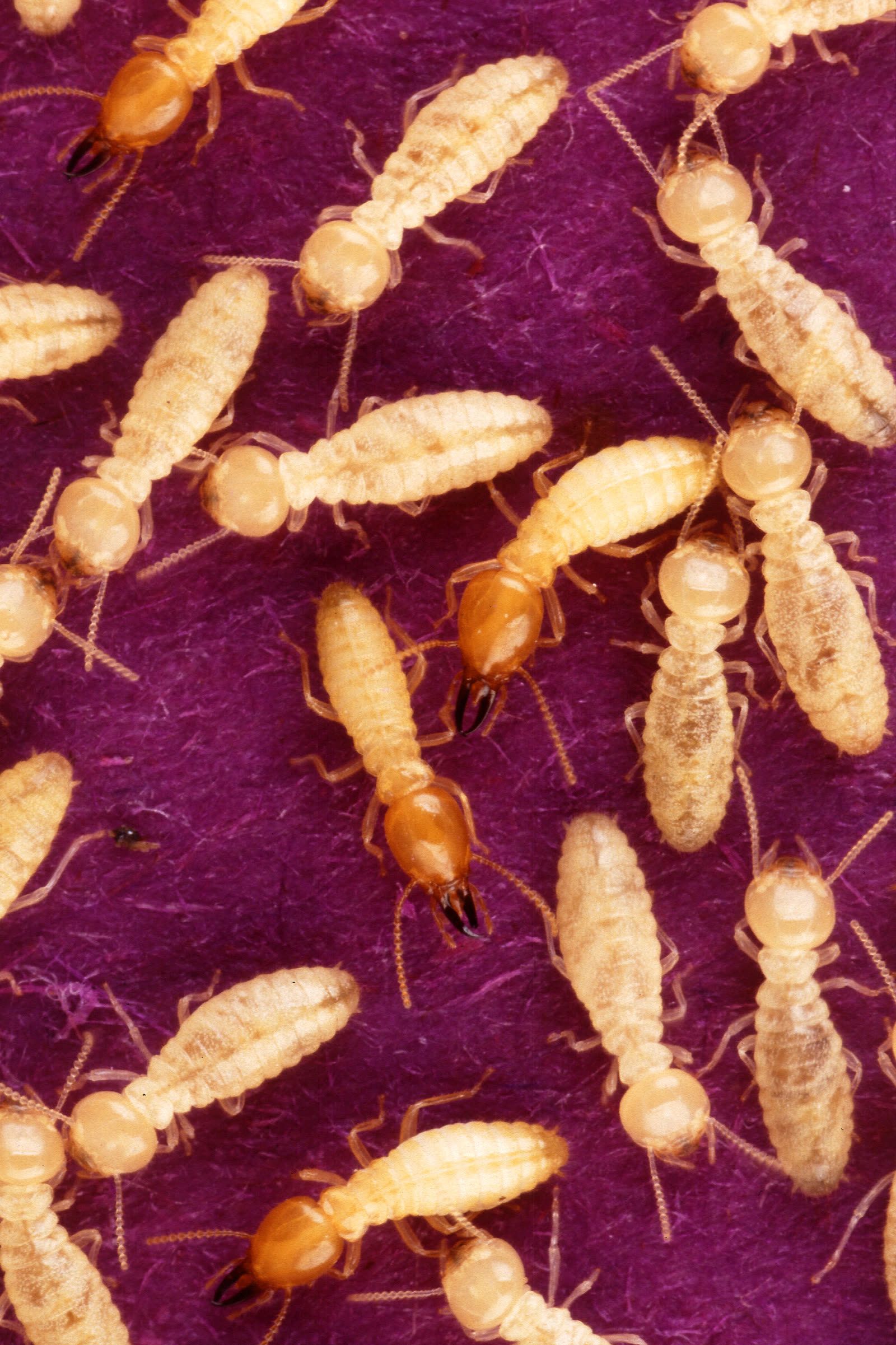

Formosan termites are subterranean termites, but they get their own page because of scale. According to UF/IFAS extension, a Formosan colony can hold several million individuals, against a few hundred thousand for a native subterranean colony, and it forages over long distances from the nest. That size is the single most useful fact about them, because it is why treating only the spot where you found them so often fails.
If you are on the Gulf Coast or in Florida and you just watched thousands of winged insects swarm the porch light after dark in spring, this is the page to read before you assume it was the ordinary kind.
Where they are, and why that comes first
Formosan termites are an introduced species with a warm, mostly southern range, so location is a fast filter. UF/IFAS reports them established in Hawaii, across the southeastern states, in California, and throughout Florida, with scattered records reaching as far as Virginia and Tennessee. Louisiana and the Gulf are the heart of it. If you are in a cold-winter northern state, a spring swarm is far more likely to be a native subterranean termite than a Formosan one.
What a swarm looks like
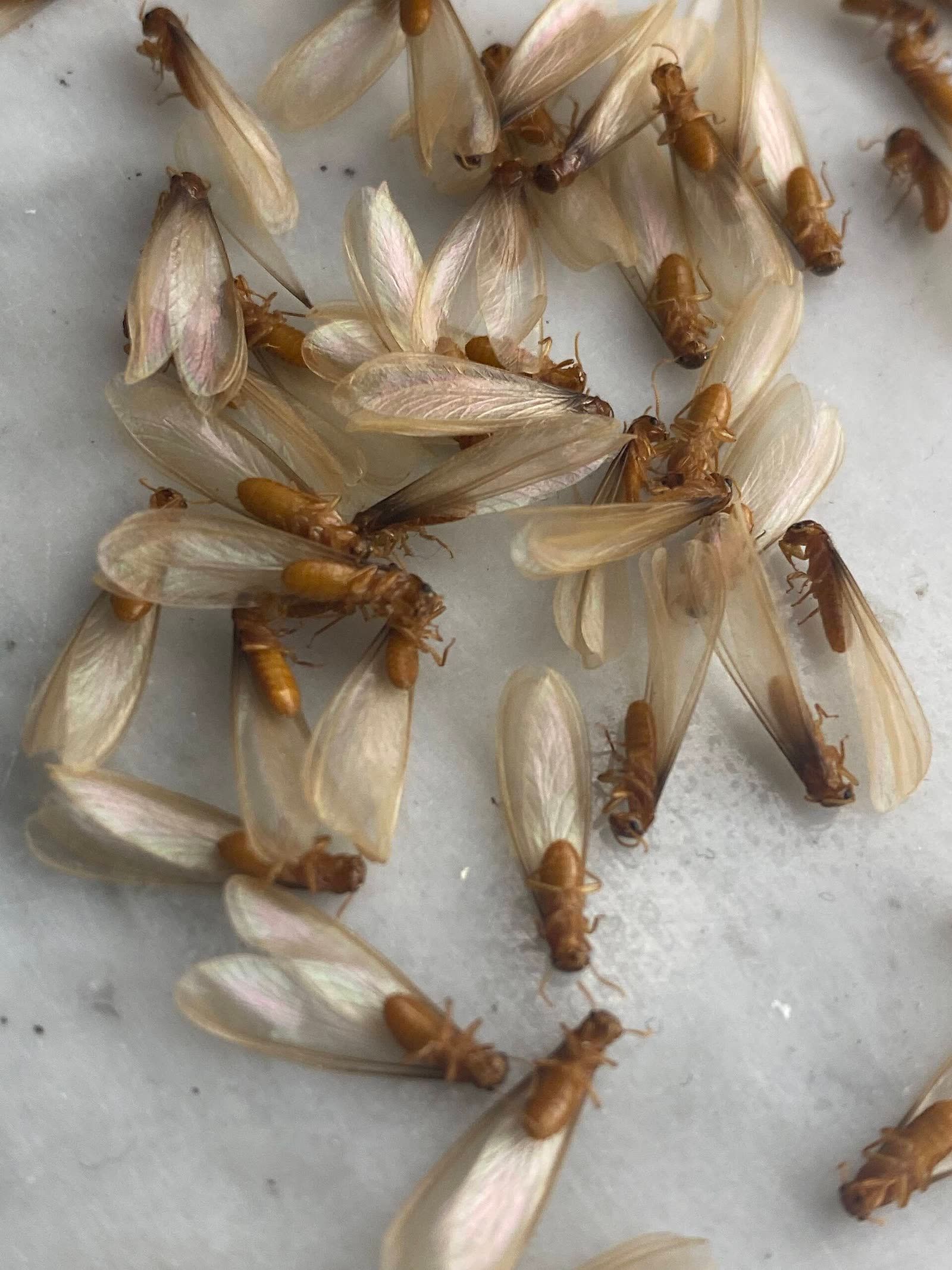
The evening swarm is the classic sighting. UF/IFAS records that in Florida the species swarms between early April and late June, shortly after sunset, and that the alates are strongly attracted to lights. So the everyday picture is a warm, still evening in late spring and a cloud of insects working a streetlight or a porch fixture, often in numbers that native termites do not match.
Up close, two more tells separate a Formosan swarmer from an ordinary native one. The swarmers run about 12 to 15 millimetres including the wings, an orange to amber-brown. Unusually, UF/IFAS notes that both the body and the wings are covered in fine hairs, and under a hand lens that faint fuzz is a genuine distinguishing feature.

The carton nest, and the trouble it causes
Most subterranean termites keep their link to the soil. Formosans go a step further and build a carton nest, which UF/IFAS describes as a blend of soil, wood pulp, termite saliva and termite feces. They pack this spongy material into wall voids and other enclosed spaces, and where there is a steady moisture source inside a structure it lets part of the colony live away from the ground.
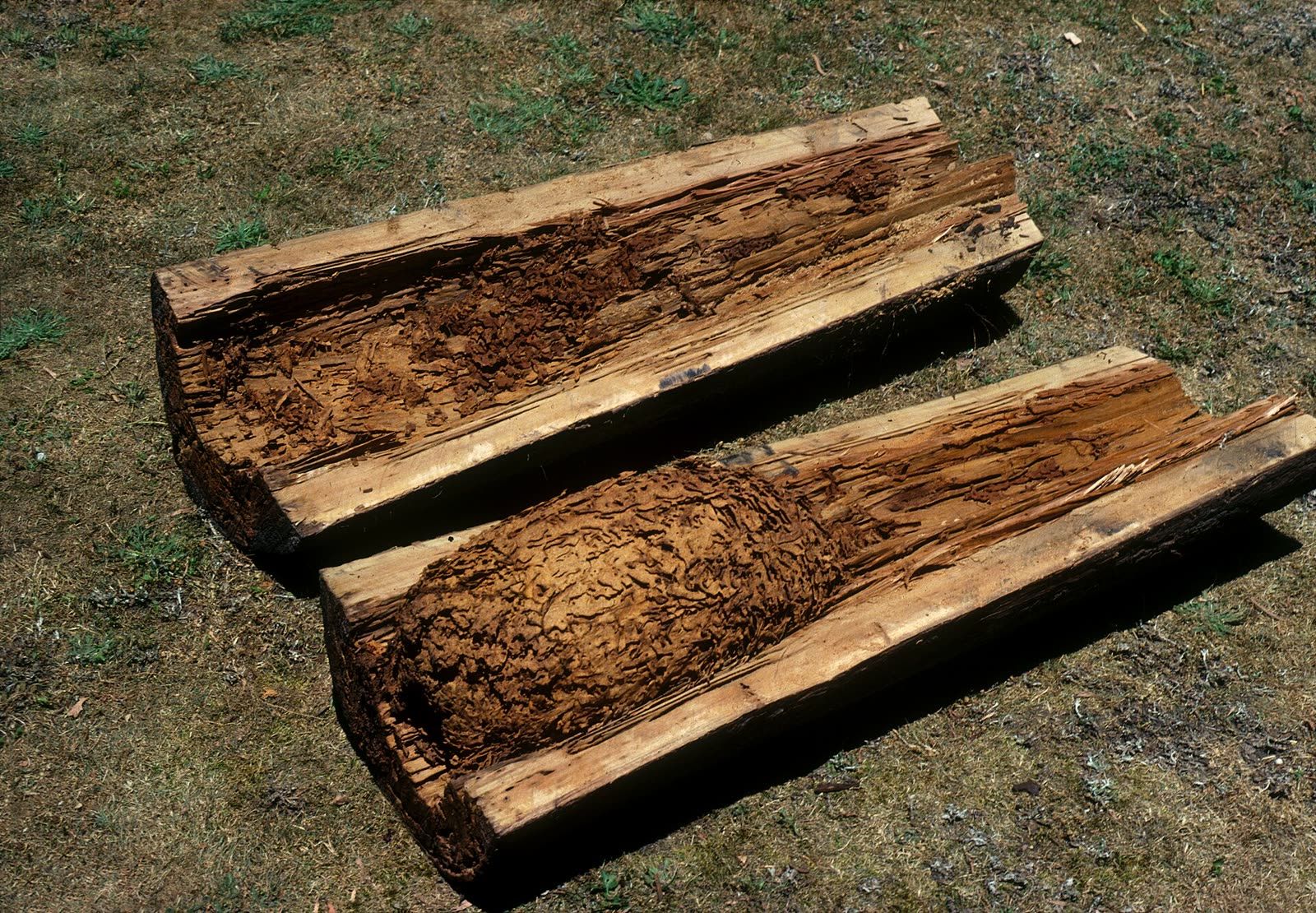

For a homeowner that has one blunt consequence. Finding and treating the visible activity does not guarantee you have reached the nest, because the nest may be sitting inside a wall fed by a slow roof leak rather than out in the yard. Soft, spongy material inside a wall cavity is worth flagging to whoever inspects.
How fast, and how much treatment has to change
Formosans earn the “very fast” label by weight of numbers rather than by working magic. A single colony of several million foraging over a wide area simply removes more wood in a season than a native colony of a few hundred thousand. The wood still goes slowly, board by board, and you are not going to lose the house over a weekend. But the total damage from an established, untreated Formosan colony builds faster than the native case, which is the real argument against leaving it.
The treatment tools are broadly the same as for any subterranean termite: non-repellent liquid termiticides that the foragers pass through, or bait systems they carry back to share. What changes is the tolerance for gaps. A partial treatment that a native colony might not survive can leave a Formosan colony going, because the colony is larger, ranges further, and may be nesting in a wall. This is a job to get thorough and to get right the first time. The methods are laid out under termite treatment.
Keeping them out
The prevention that matters most is the moisture control that denies them a foothold indoors: fix roof and plumbing leaks, keep gutters and downspouts moving water away, and ventilate crawlspaces, because a reliable damp spot inside a wall is exactly what lets a carton nest persist above ground. Outdoors, the ordinary subterranean advice still applies: break wood-to-soil contact and keep firewood and mulch off the foundation. During swarm season, reducing bright exterior lighting on still spring evenings cuts down on the flights being drawn to the house in the first place.
What people get wrong
The common mistake on the Gulf is treating a Formosan swarm as just another spring termite flight and spot-treating where the swarmers came out. Given the colony size and the long foraging range, a spot fix is the treatment most likely to leave part of the colony intact. If the swarm was large, after dark, and around the lights, take it as a reason to have the whole structure looked at rather than one window frame.
The other is the reverse: assuming every heavy swarm is Formosan and panicking. Plenty of native Reticulitermes swarms are perfectly ordinary; see subterranean termites for that case, and drywood termites if what you actually found was pellets rather than a swarm. Keep a few specimens and let an inspection tell you which one you are dealing with.
Sources
- Formosan Subterranean Termite, Coptotermes formosanus (EENY-121) — University of Florida IFAS Extension, Featured Creatures. Accessed 2026-08-02.
- Subterranean and Other Termites (Pest Notes 7415) — UC Statewide IPM Program, updated May 2014. Accessed 2026-08-02.
- Termites: How to Identify and Control Them — US Environmental Protection Agency, last updated 2025-10-21. Accessed 2026-08-02.
Signs to look for
- Dense evening swarms around porch and street lights in late spring
- Swarmers with faintly hairy bodies and wings, amber-brown in color
- Soft, spongy carton material found inside a wall or a hollow door frame
- Damage that seems heavy for how recently the house was built or treated
Common questions
How do I know if my swarm was Formosan rather than a native subterranean termite?
Timing, place and scale are the everyday clues. Formosan swarms come out in the evening shortly after sunset, in late spring, and they pile onto outdoor lights in large numbers. Native subterranean termites usually swarm in daylight. Up close, UF/IFAS notes that Formosan swarmers are an orange amber-brown and carry fine hairs on the body and wings. If you are on the Gulf and the light fixtures were swarmed after dark in May, Formosan is a fair guess — but keep a few and let an inspector confirm it.
Are Formosan termites treated differently from ordinary subterranean termites?
The tools are broadly the same — non-repellent liquid termiticides and bait systems — but the margin for error is smaller. A colony of several million that forages over long distances and can nest inside a wall void is more likely to survive a partial job than a native colony is. That makes thoroughness, and a treatment that reaches the whole colony rather than one visible spot, matter more here.