 Termite Registry
identification
Carpenter Ants vs. Termites: Telling Them Apart
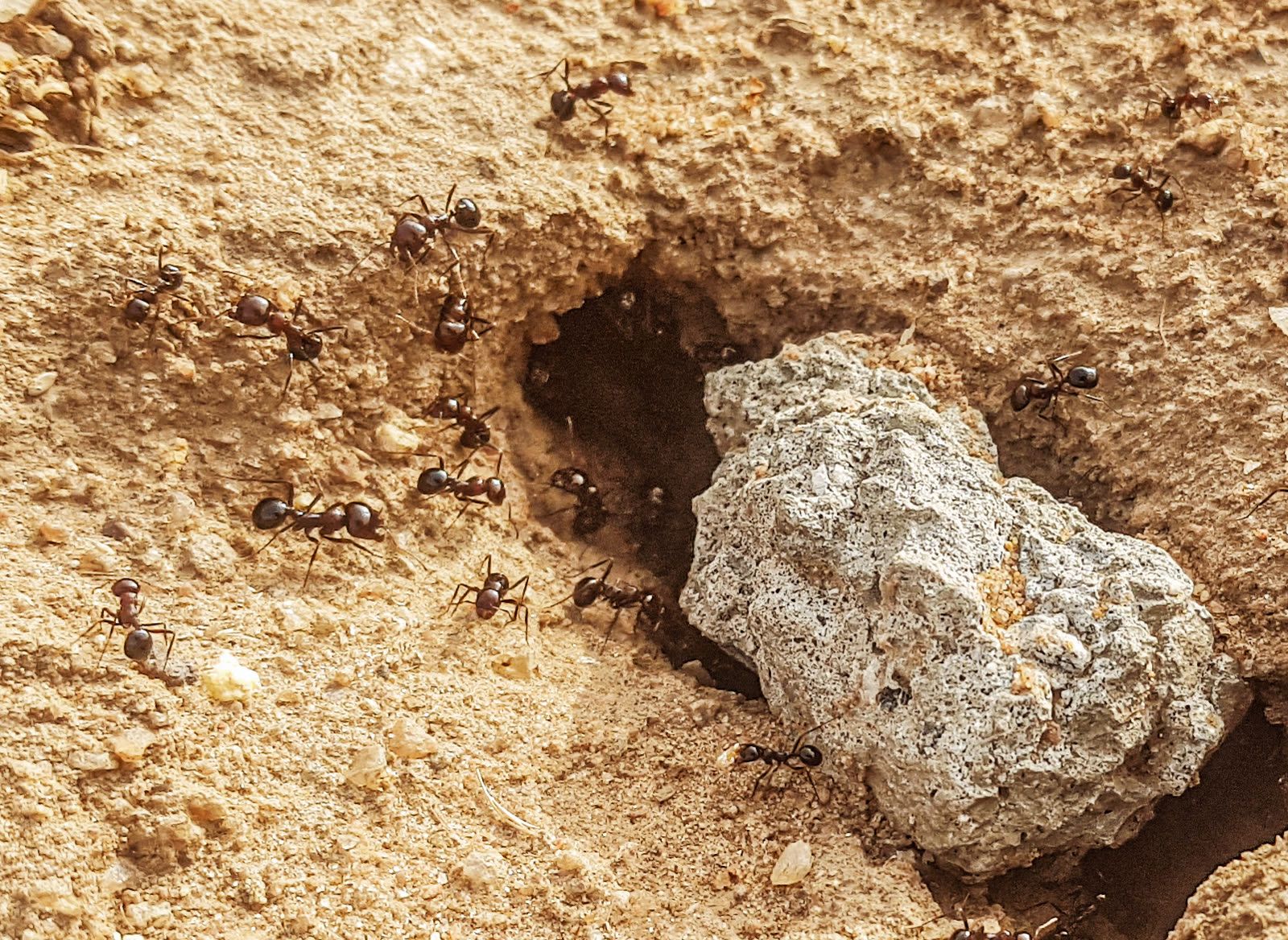

Termites are insects that eat wood for the cellulose in it; carpenter ants are large ants that do not eat wood at all, but tunnel into it to make a nest and dump the shavings back out. That one difference is what you are sorting out, and most of the time you can settle it from the pile of debris without ever seeing the insect. Coarse, stringy shavings mixed with bits of dead insect point to carpenter ants. Hard sand-like pellets, or packed soil, point to termites.
- Carpenter ants dump debris; they do not eat the wood. Excavated particles get pushed out of the nest, so you find a pile rather than hollowed wood full of pellets.
- The pile is the fastest tell. Coarse, stringy shavings with dead insect parts mean carpenter ants. Hard six-sided pellets mean drywood termites. Packed soil or mud means subterranean termites.
- Cut into it. Carpenter-ant galleries are smooth and clean. Termite galleries carry soil and fecal pellets.
- Carpenter ants follow water. They nest in wood that is already moist or rotting, so finding them usually means finding a leak.
Who this page is for
You found something in the wood and you need to know which of two insects you are dealing with, because the fix is different for each. That is what this one is for. If you already know it is termites and want the biology, go to the termite types index. If you have a photo and want a faster read on it, the termite scan tool is built for that.
Termites eat the wood. Carpenter ants only tunnel it
This is the difference everything else follows from. Termites consume wood as food; carpenter ants do not — they only tunnel it to nest. As the University of Kentucky’s extension entomology puts it, “While carpenter ants do not eat wood, they do excavate and create tunnels throughout wood.” They are after a place to live, not a meal.
Penn State Extension spells out what that means for what you will find: “Because carpenter ants do not consume the wood as food, excavated particles are dumped outside the nest.” So a carpenter-ant problem leaves a pile of waste somewhere you can see it, while the ants live in a cavity they hollowed out. A termite eats its way through and leaves much less lying around, because the wood is going into the colony rather than onto your floor.
Reading the pile of debris
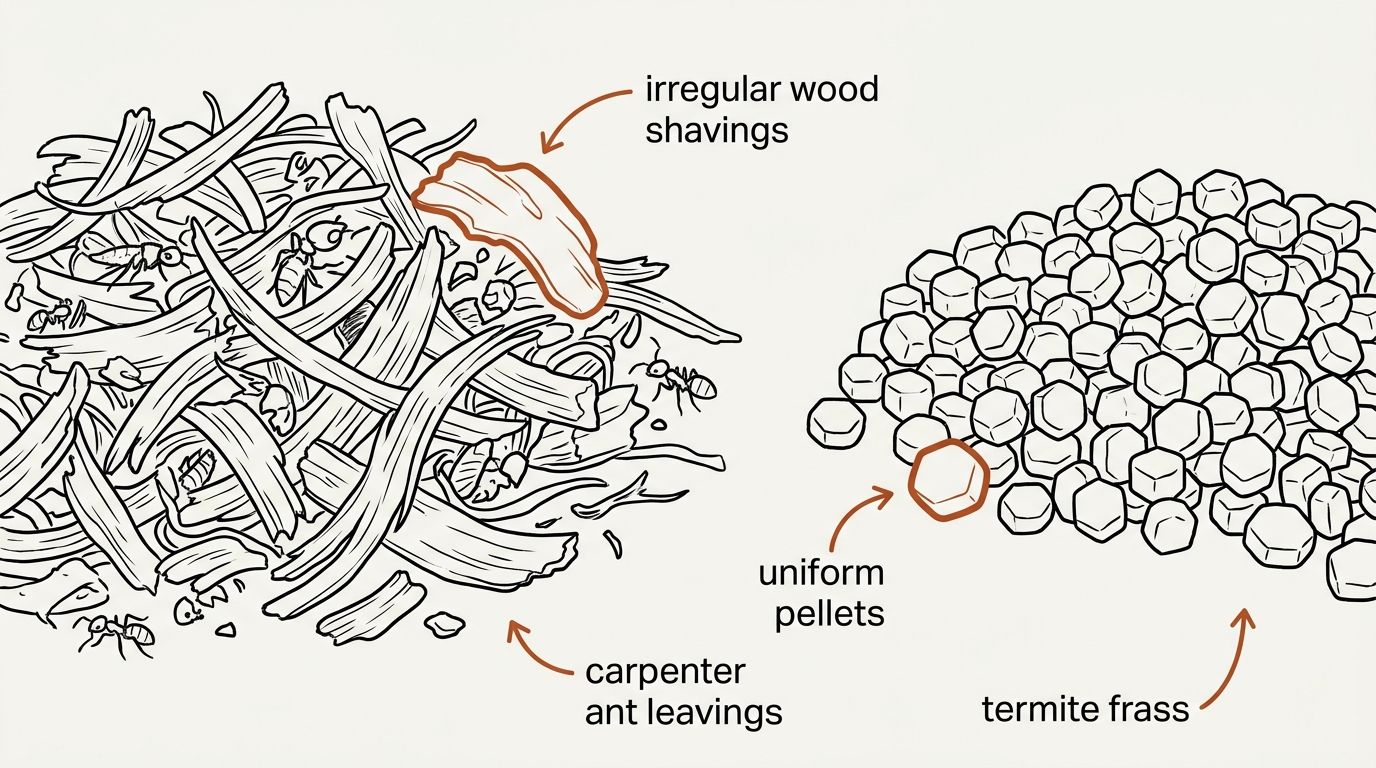
The debris is where most people get their answer, so look at it closely before you look at anything else. Penn State Extension describes carpenter-ant leavings as “piles of coarse, stringy wood particles, dead insect parts, and other debris” sifting from cracks in the siding, behind moldings, and in basements and attics. The dead insect parts are the giveaway. Termites do not mix their dead into a sawdust pile.
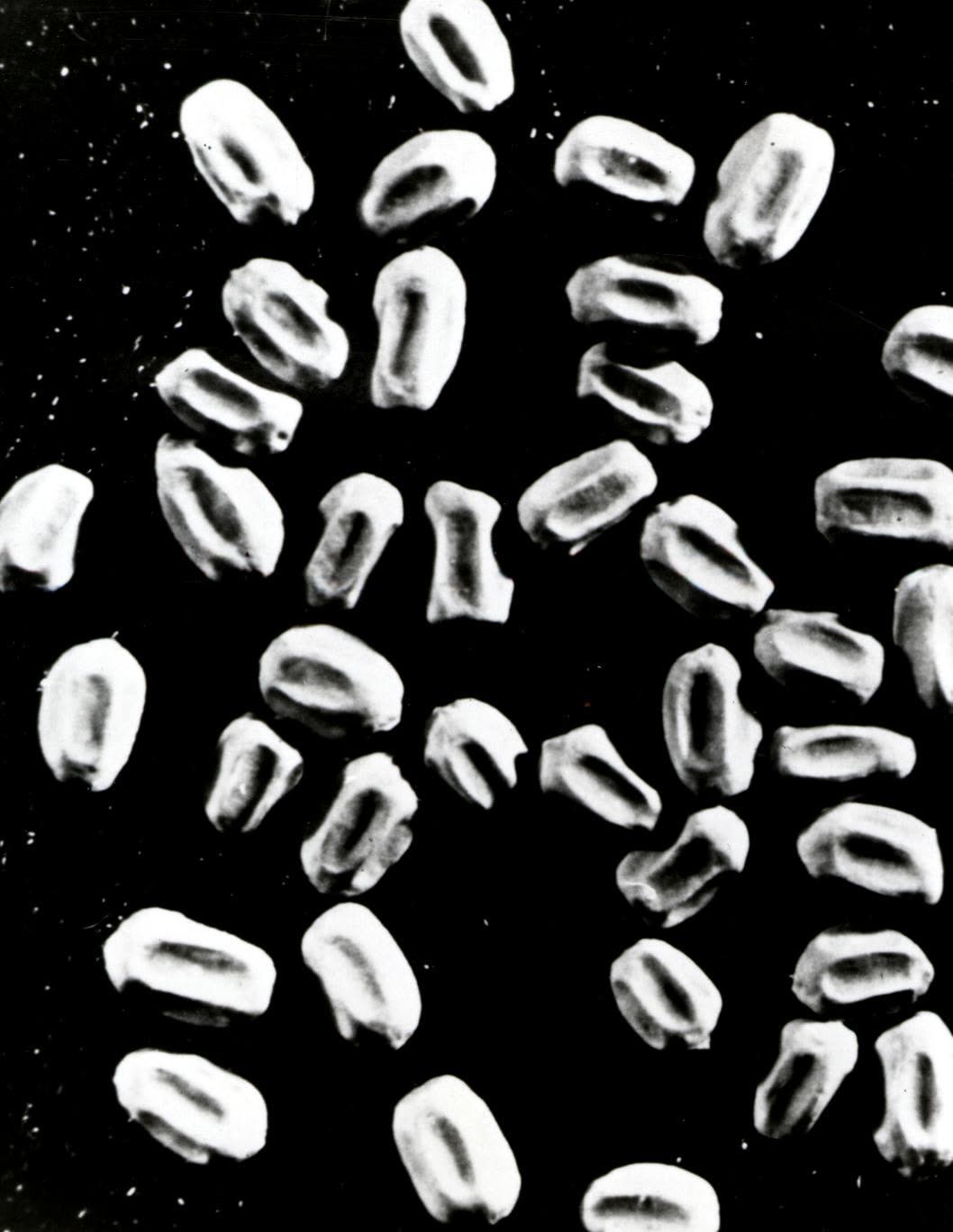
Termite debris looks nothing like that. Drywood termites leave hard pellets, and UC IPM contrasts “carpenter ant sawdust,” which is fibrous, with “the 6-sided shaped pellets of drywood termites.” Subterranean termites leave no loose pile worth speaking of at all. They pack their galleries and runways with soil and build mud tubes instead, which is why a foundation smeared with pencil-width mud lines points to subterranean termites and never to ants.
A pile of coarse shavings with insect bits is carpenter ants. Hard granular pellets that reappear after you sweep are drywood termites. Mud and packed soil, with no loose pile, is subterranean termites.


What the galleries look like inside
If you can cut into the damaged wood or pull a piece away, the inside settles it. Penn State Extension: “Unlike termites, the tunnels or galleries of carpenter ants are smooth-sided and contain no soil particles or fecal pellets.” Carpenter ants keep their nest clean because they are living in it, so the walls have an almost sanded look. A termite gallery is the opposite, rough and carrying the soil and fecal material Penn State says the ant tunnels lack.
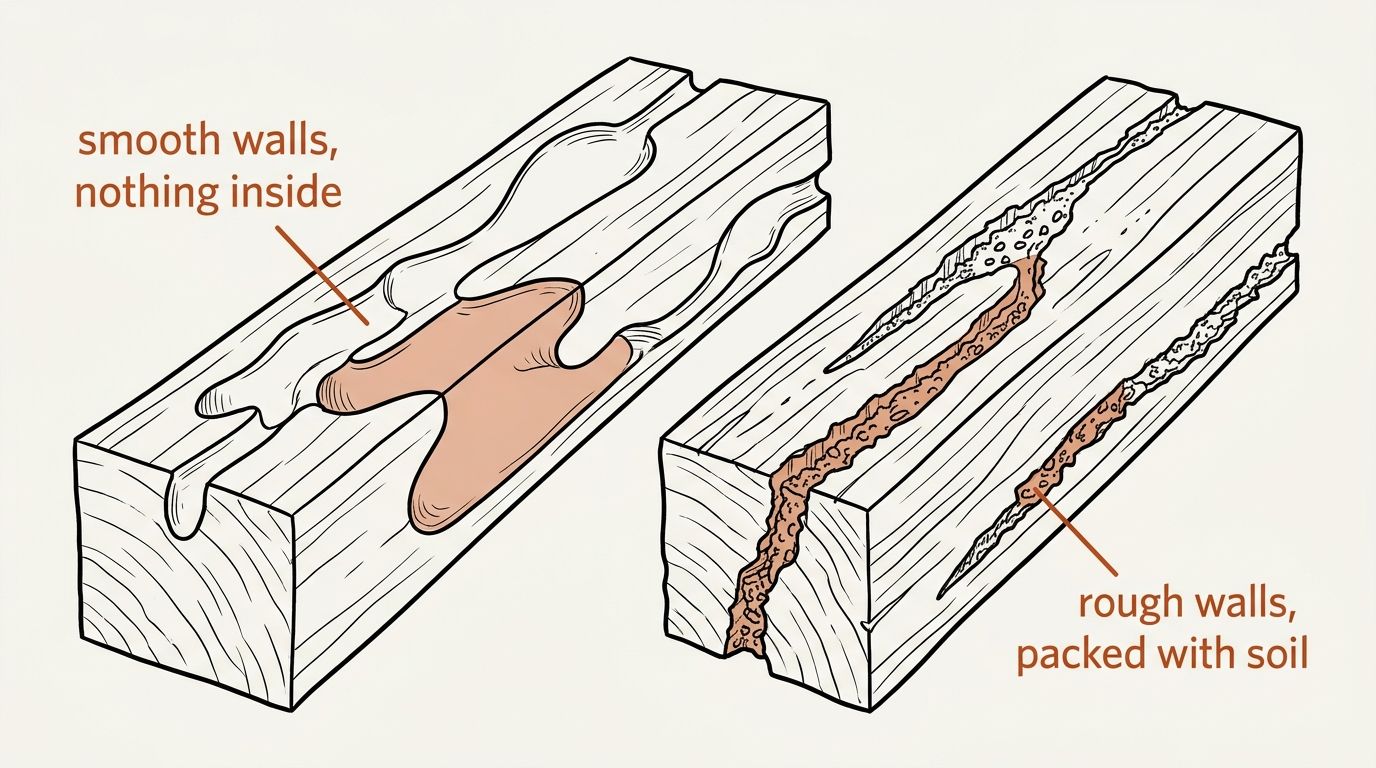
Smooth and clean means ants; rough and dirty means termites. You do not need a hand lens for this one, just a screwdriver and a flashlight, which are the same two things worth keeping near the crawlspace hatch anyway.
If what you found had wings
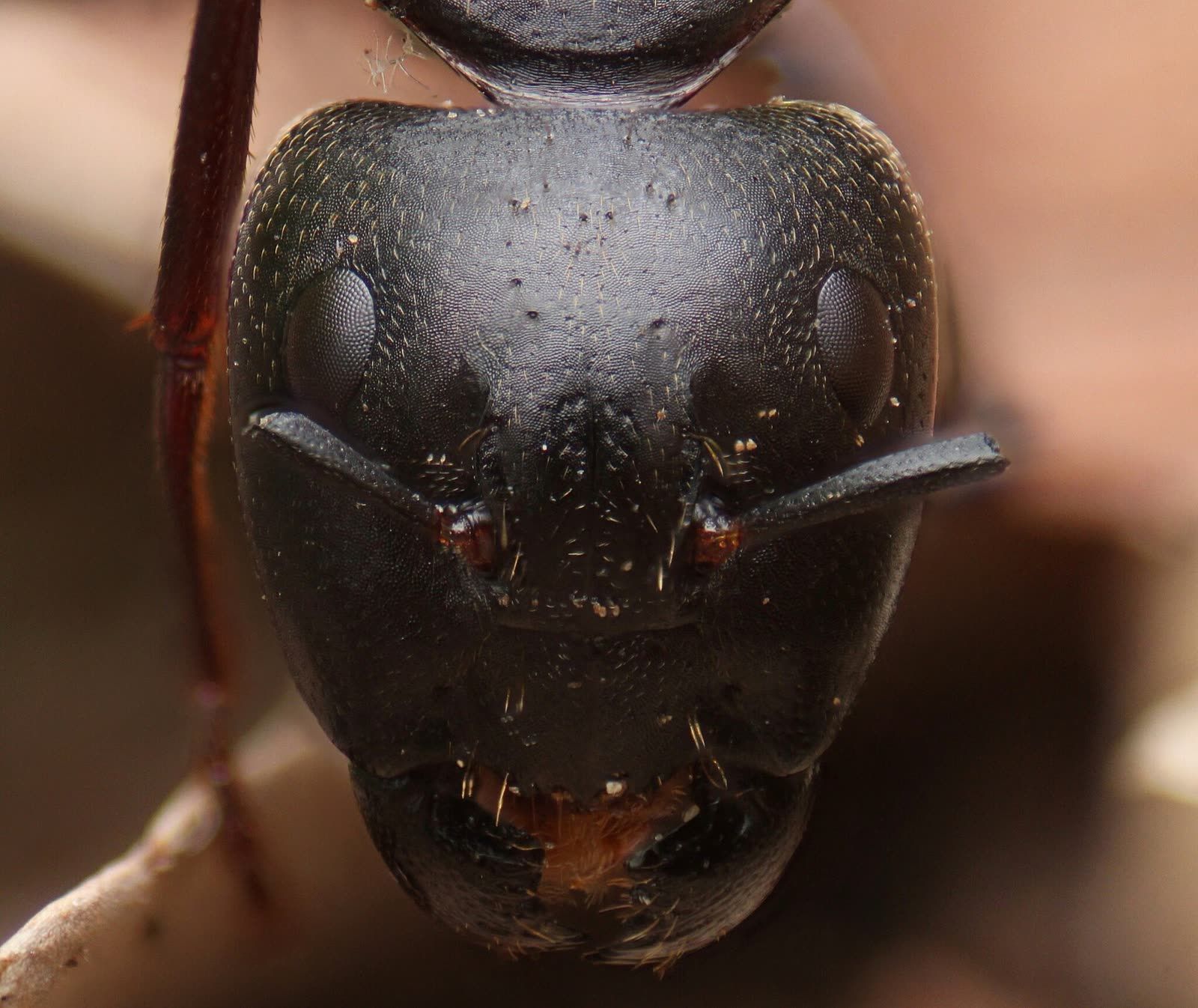
Both insects fly to start new colonies, and the winged forms are easy to tell apart if you catch one. Carpenter ant swarmers are ants, and ants and termites differ in three places on the body. The University of Kentucky’s extension lays it out: “Termites have straight antennae, a uniformly thickened waist, and wings of equal size. Conversely, ants have elbowed antennae, constricted waists, and forewings that are longer than the hind wings.”
So a bent antenna, a pinched wasp-like waist, and one pair of wings clearly longer than the other means a carpenter ant. A straight antenna, a body with no pinch, and four wings the same length means a termite. Where they came out matters less than the body itself, though termites emerging indoors usually mean a colony in the structure, which is the more expensive answer to get wrong.
Why carpenter ants point at a moisture problem
Carpenter ants are a moisture story more than a wood story. Penn State Extension notes they “seldom tunnel into dry, sound wood, but they may excavate moist, rotting wood and other soft materials,” and will not infest wood “that is sound and has a moisture content of less than 15 percent.” The University of Kentucky says the same in fewer words: carpenter ants “typically inhabit moist wood.” UC IPM notes a colony often begins where there is “damage from water or wood decay,” then expands from there into sound wood.
Read together, that means finding carpenter ants is usually finding a leak. A gutter dumping against the wall. A sill kept wet by bad grading. A roof drip that rotted the end of a rafter. The ants moved into wood the water had already softened. Fixing the moisture and cutting out the wood it rotted removes what drew them, and it is the same drainage-and-carpentry work that discourages termites. Both problems trace back to water and wood-to-soil contact far more than to chemistry.
How much time you actually have
You have time, and it helps to know that before you call anyone. Termites damage wood slowly. The University of Kentucky’s extension states it plainly: “Termites damage wood slowly; the amount of damage caused by taking an additional day, week, or month to make an informed decision generally is inconsequential.” A colony that got into your subfloor this spring has not compromised your framing by August.
Carpenter ants are working in wood that was already wet and rotting when they arrived, and that softened wood is the damage worth chasing whether or not the ants are still there. I would not lose sleep over either one tonight. I would find the water. The insect is a symptom you can identify at your own pace. The leak is the thing quietly doing the structural work, and it was doing it before anything moved in.
Here’s what I’d actually do
Collect one. Put it in a ziplock bag, or if it flew off, sweep a spoonful of the debris in instead. Photograph it on something white, next to a penny or a quarter for scale, and note beside the photo whether the pile was coarse stringy shavings or hard pellets, and whether the wood nearby was wet.
That one photo and that one note answer the question most of the time. Coarse shavings with insect parts, on damp wood, is carpenter ants and a moisture repair. Hard six-sided pellets is drywood termites. Mud tubes and packed soil is subterranean termites, and that is the one I would move on soonest, though even there you have weeks rather than hours.
If the wood is structural, or you have cut into it and still cannot tell what you are looking at, that is the point to bring in a licensed pest control operator rather than a website. I have not seen your house, and the difference between a nuisance nest and a real structural repair is something nobody can call from a photo, including me. Run the picture through the termite scan if you want a faster first read, then go find the water.
Sources
- Carpenter Ants — Penn State Extension, updated 2026-06-24. Accessed 2026-08-02.
- Carpenter Ants (Pest Notes 7416) — UC Statewide IPM Program, updated August 2009. Accessed 2026-08-02.
- Carpenter Ants (ENTFACT-603) — Allison Lopina and Zach DeVries, University of Kentucky Entomology, revised March 2026. Accessed 2026-08-02.
- Termite Control: Answers for Homeowners (ENTFACT-604) — Michael F. Potter, University of Kentucky Entomology, revised March 2026. Accessed 2026-08-02.
Common questions
Could the same piece of wood have both carpenter ants and termites?
It can. Both are drawn to wood that is damp or rotting, so a wet sill or a leaking rafter end can attract either or both. They do not cooperate, and you tell them apart the same way regardless: the coarse shavings and dead insect parts of a carpenter ant nest look nothing like six-sided drywood pellets or the packed soil of a subterranean colony. Collect a sample of each thing you find.
If carpenter ants do not eat the wood, why does the damage matter?
Because they hollow out galleries to nest, and Penn State Extension notes they excavate moist, rotting wood in the first place. So the damage you find is partly the ants and mostly the water that softened the wood before they moved in. A large colony working a wet beam for a few years can weaken it. The repair is real; it is just as much a moisture and carpentry job as a pest one.
Is fixing the wet wood enough, or do I still have to treat the ants?
Fixing the moisture and cutting out the rotted wood removes what drew them, since Penn State Extension says carpenter ants seldom tunnel dry, sound wood under 15 percent moisture. For a small nest that often settles it. A large or hidden colony may still need the nest located, and if the wood is structural or you cannot find the nest, that is the point to call a licensed pest control operator.
- carpenter ants
- identification
- wood damage
- frass
Related reading
identification
Subterranean vs Drywood Termites: Which You Have
Subterranean termites nest in the soil and reach your wood through mud tubes; drywood termites live entirely inside dry wood and touch no soil at all.