 Termite Registry
identification
Termite Droppings vs Sawdust: Reading the Pile
A small pile of wood debris on your floor is almost never sawdust. It is insect droppings, excavation waste, or beetle powder, and of the four things that leave a pile like that, drywood termite pellets are the only one that is actually droppings.
Which of the four it is decides everything that happens next, and the fastest way to tell is to feel it.
Is this sawdust or termite droppings?
If no power tools have run in the room recently, you are looking at insect waste rather than wood shavings. Insects leave debris behind in three ways: ejecting digested manure, kicking out chewed wood to hollow out nests, or sifting powder out as adult beetles mature and chew exit paths through timber.
The four culprits separate on texture before anything else. Feel the debris between your fingers or look closely at its shape:
| Insect | Waste Type | Texture and Appearance | Exit Hole Sign |
|---|---|---|---|
| Drywood termites | Digestive manure | Hard, six-sided, uniform pellets | Round kickout holes under 2mm across |
| Carpenter ants | Nest excavation waste | Coarse, fibrous wood; insect body parts | Cracks, gaps, or wall seams |
| Powderpost beetles | Larval emergence powder | Fine flour, coarse meal, or gritty dust | Tiny round shot holes (pinhead to 1/8 inch) |
| Subterranean termites | None above ground | No surface pile (waste kept inside tubes) | Soil-and-saliva mud tubes |
Nothing in that pile was cut by a saw. Texture is your best sorting tool, and knowing which insect left it tells you what step to take next.
What do drywood termite pellets look like?
Drywood termite pellets are hard separate grains with six flattened sides, all of them much the same size as each other. That uniformity is the first thing to look for, because nothing that came off a saw or out of an ant nest is uniform.
UC IPM notes that these six hexagonal sides are diagnostic for drywood termites. The University of Arizona Cooperative Extension reports that the pellets are hard, elongated, and less than 1/25 inch long, featuring rounded ends and six flattened or concavely depressed sides. Arizona explains that this unique geometric shape happens when the termite squeezes the fecal material in its hindgut to pull out and conserve water. Arizona also notes that pellets gather in small piles directly under kickout holes, scatter across wider circles if they fall from a high ceiling, or end up caught in spider webs.
Texas A&M University Extension describes the pellets as about 1/32 inch long with long dimples or flutes down each side. In their description, the pellets are six-sided, blunt at one end, and pointed at the other. Texas A&M points out that these unique pellets can often be dislodged from hidden kickout holes by tapping gently on the wood, and they recommend inspecting the drawers and lower surfaces of antique or used furniture before bringing it home.
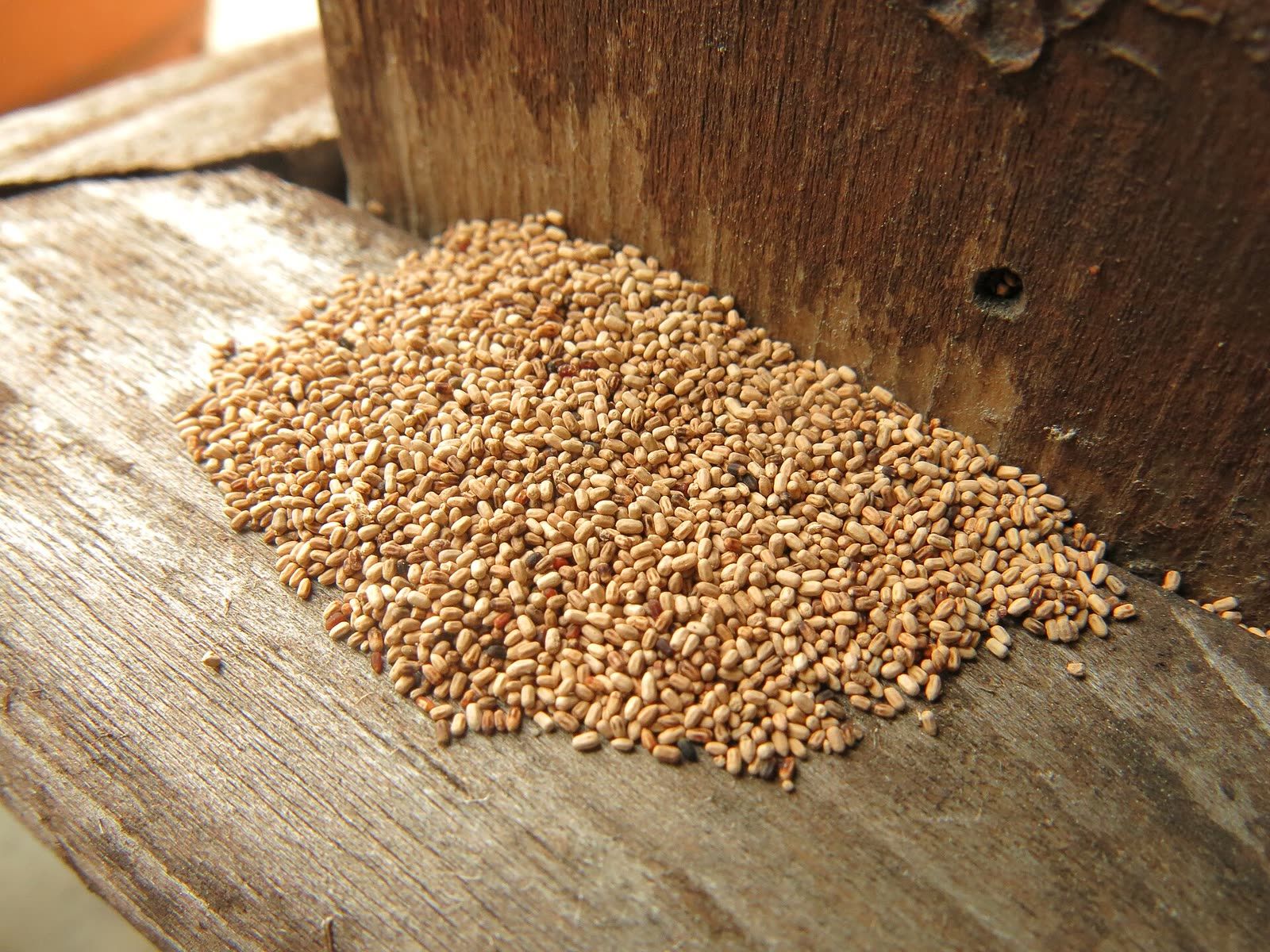

UF/IFAS Extension notes that worker termites push these pellets out of kickout holes measuring 1 to 2 mm in diameter, creating neat piles or scatter circles depending on the drop height. UC IPM adds a clear contrast: dampwood termite pellets are football-shaped, rounded at both ends, and lack the distinct longitudinal ridges found on drywood droppings.
On color, the three sources say three different things:
- Texas A&M states that pellets are generally the color of the wood the termites are eating.
- Arizona Extension notes they are typically light tan, with some black pellets mixed into the pile.
- UF/IFAS Extension writes that pellets come in cream, red, or black, but stresses that color is completely unaffected by wood color or temporal changes, calling the true cause of pellet color unknown.
Those three cannot all be right, and I am not going to pretend one of them is. My read is that color is the one property here the published sources do not agree on, so leave it out of the identification and work from shape, size, and how uniform the grains are.
What do carpenter ant leavings look like?
Carpenter ant leavings look like rough wood shavings mixed with dark debris, dirt, and shredded insect body parts.
Penn State Extension describes these piles as coarse, stringy wood particles, dead insect parts, and general debris sifting out from cracks in siding, moldings, attics, or under porches. UC IPM notes that carpenter ant sawdust is distinctly fibrous, putting it in stark contrast to the hard, six-sided pellets left by drywood termites.
University of Kentucky Entomology is clear that carpenter ants do not eat wood. They excavate tunnels through it to nest, generally preferring wood that is already decayed or damaged, which is why the debris ends up outside rather than inside. That is the whole reason there is a pile at all. The dead insect parts Penn State describes are the detail worth looking for, because nothing a termite leaves has bits of insect in it. If you have found the insects too, my guide on carpenter ants vs termites takes the comparison further into their bodies and their galleries.
What is the fine powder coming from small round holes?
Fine powder spilling from tiny round holes comes from wood-boring beetle larvae finishing their development and chewing exit paths out through the surface of the timber.
The University of Kentucky Extension explains that “powderpost beetle” is a broad term for several small beetle species that reduce interior wood to flour. Adults chew their way out of the timber, leaving small, round exit spots called shot holes.
Kentucky details three distinct powder textures depending on the beetle family:
- Lyctid beetles produce powder as soft as flour or fine talc. Their emergence holes are round and roughly the size of a pinhead. Lyctids feed strictly on hardwoods, so you will find their piles beneath oak, ash, walnut, hickory, or cherry flooring, paneling, moldings, window frames, and furniture.
- Bostrichid beetles produce a more meal-like powder. This coarser dust tends to stay tightly packed inside the exit holes and larval tunnels rather than spilling freely onto the floor.
- Anobiid beetles leave powder that may feel gritty rubbed between the fingers. Their emergence holes run 1/16 to 1/8 inch. Unlike the other two, Kentucky says anobiids can seriously damage beams, joists, and other structural components, and they prefer moist wood, needing 13 to 30 percent moisture content, so infestations are worst in damp crawl spaces, basements, garages, and unheated outbuildings.
Pinch a little of the dust between thumb and forefinger. Flour, meal, or grit is a real fork in the identification, and it costs nothing to run.
Why do subterranean termites leave no pile?
Subterranean termites leave no pile on the floor because they deposit their excrement inside closed wood cavities or mix it into the soil tubes they use for shelter.
UC IPM says the excavations subterranean termites make are hollow, completely enclosed cavities running roughly along the grain, and that some species deposit light-brown excrement inside those cavities. Nothing is pushed out to a surface. What UC IPM calls the most commonly seen evidence instead is the shelter tube, built from soil mixed with saliva and bits of wood.
So looking for a pile is how people miss them. The thing to go looking for instead is a mud tube. If you are unsure which termite species might be near your foundation, my comparison of subterranean vs drywood termites explains the difference in their habits. You can also run through my termite scan walkthrough to match what you are seeing to the right pest.
Is the pile fresh or old?
You cannot tell whether a drywood termite colony is currently active just by looking at its pellets, but wood-boring beetle powder offers clear visual markers of age.
For drywood termites, UC IPM states flatly that it is impossible to determine from fecal pellets alone whether an infestation is active or how far it extends into the structure.
For beetles, University of Kentucky Extension provides clear rules to separate fresh damage from old exit points:
- Active beetle infestations push out powder that matches the color of freshly sawed wood.
- New exit holes show clean, bright interior edges that have not taken on the weathered look of the surrounding timber.
- If the wood was previously stained or painted, new emergence holes show fresh, unstained wood along their inside rims.
- Old beetle powder appears yellowed, caked, or covered in ambient house dust and cobwebs.
Three sources warn about the same false positive in the sweep-and-check-back test, and they are describing two different insects. UC IPM notes that while clearing away pellets near a kickout hole and checking later can help establish activity, normal building vibrations and structural movement can easily cause old pellets to fall. UF/IFAS Extension agrees, stating that remaining pellets can be dislodged from previously infested wood by movement, meaning a new pile does not always prove an active colony exists. Kentucky Extension warns of the exact same phenomenon with beetles, noting that careful observation is needed because structural vibrations easily knock old powder out of abandoned larval galleries.
My read on that convergence is that the standard advice to sweep the pile up and wait a few days carries a known way of misleading you, and almost nobody who repeats the advice repeats the caveat. A slammed door or a heavy step overhead can drop old pellets or old powder onto a floor you just cleaned. Returning debris is a reason to book an inspection. It is not a finding.
What should you do when you find a wood pile?
Gather physical evidence into a clean container and photograph the site thoroughly before sweeping the area or booking a service call.
Here is the exact process I would follow:
- Collect a small sample of the dust or pellets using a piece of stiff paper, and seal it inside a clear plastic bag or small jar.
- Take sharp, close-up photos of the pile next to a small coin or tape measure to record scale.
- Look directly above the pile with a bright flashlight. Photograph any tiny round holes, gaps in trim, or cracks in siding.
- Write down the precise location, noting nearby windowsills, baseboards, or exposed ceiling joists.
Nobody should be rushing you. Writing about powderpost beetles, Kentucky’s extension says these insects damage wood slowly, that there is no need to act immediately out of fear for the structure, and that a wait-and-see approach often makes the most sense while it is uncertain whether an infestation is active.
There is also a limit to how far you can take this yourself, and UC IPM states it: final confirmation of drywood pellets against other wood-destroying pests or plain wood debris may need help from an expert, and the pests most often confused with drywood termites in exactly this way are wood boring beetles and carpenter ants. I have not seen your floor or the wood above it.
So the honest version is that the pinch test and the shape of a single grain will get you to a short list, and the last step is somebody standing in the room. If you have found other things as well as the pile, my guide to the signs of termites covers what each one settles. My guide on how to vet a pest control company covers what to check before you call one, and a termite inspection is the visit itself. What follows an inspection is on the termite treatment hub.
Sources
- Pest Notes: Drywood Termites (Publication 7440) — UC Statewide IPM Program, 2014. Accessed 2026-08-07.
- Drywood Termites (AZ1232) — University of Arizona Cooperative Extension — Dawn H. Gouge, Carl Olson, Paul Baker, 2009-05. Accessed 2026-08-07.
- Drywood Termites (E-366) — Texas Cooperative Extension — Roger E. Gold, Harry N. Howell Jr., Grady J. Glenn and Kimberly M. Brown, 2005-12. Accessed 2026-08-07.
- West Indian Drywood Termite, Cryptotermes brevis (EENY-079) — University of Florida IFAS Extension, Featured Creatures, undated. Accessed 2026-08-07.
- Powderpost Beetles (ENTFACT-616) — University of Kentucky College of Agriculture — Michael F. Potter, 2026-03. Accessed 2026-08-07.
- Carpenter Ants — Penn State Extension, 2026-06-24. Accessed 2026-08-07.
- Pest Notes: Carpenter Ants (Publication 7416) — UC Statewide IPM Program, undated. Accessed 2026-08-07.
- Carpenter Ants (ENTFACT-603) — University of Kentucky Department of Entomology — Allison Lopina and Zach DeVries, 2026-03. Accessed 2026-08-07.
- Pest Notes: Subterranean and Other Termites (Publication 7415) — UC Statewide IPM Program, 2014-05. Accessed 2026-08-07.
Common questions
How do I tell termite droppings from sawdust?
Look at one grain, ideally through a hand lens or a phone camera at full zoom. Drywood termite pellets are hard, all much the same size, and six-sided with flutes running down each face. Real sawdust and carpenter ant leavings are fibrous and uneven, and UC IPM contrasts exactly those two things. Powderpost beetle powder is finer than either, closer to flour. Texture in your fingers gets you most of the way before shape confirms it.
Why does the pile come back a few days after I sweep it up?
Usually because something is still working in the wood, and that is what UC IPM's clean-up-and-check-back suggestion is for. It is not proof, though, and UC IPM, UF/IFAS and Kentucky's extension all note the same catch from different angles: vibration and movement in a building can shake old pellets and old powder out of galleries nothing lives in. Returning debris is a good reason to book an inspection and a poor reason to conclude anything on your own.
Does the color of the pellets tell me anything?
Less than you would think, because the sources disagree. Texas A&M says pellets are generally the color of the wood the termites feed on. Arizona says they are typically light tan with some black mixed in. UF/IFAS says color is unaffected by the wood and that nobody knows what determines it. When three extension services describe one property three ways, my read is that you identify on shape and size and leave color out of it.
Do subterranean termites leave droppings on the floor?
No, and looking for a pile is how people miss them. UC IPM describes some species depositing light-brown excrement inside the cavities they hollow out rather than pushing it into the open, and the evidence subterranean termites do leave is the shelter tube. If you have mud on a foundation wall and no pile anywhere, that is a consistent picture rather than a contradiction.
- frass
- termite droppings
- identification
- drywood
- powderpost beetles
Related reading
identification
Carpenter Ants vs. Termites: Telling Them Apart
Termites are insects that eat wood for the cellulose in it; carpenter ants are large ants that do not eat wood at all, but tunnel into it to make a nest and dump the shavings back out.
identification
Subterranean vs Drywood Termites: Which You Have
Subterranean termites nest in the soil and reach your wood through mud tubes; drywood termites live entirely inside dry wood and touch no soil at all.