 Termite Registry
Termite Scan
Work out what you found
A few winged insects on a sill, a little heap of what looks like sawdust, a dirt-colored line running up the foundation. Most people land here holding one of these.
Five signs, at most two questions, about a minute. At the end you get what your find most likely points to, and how to confirm it. No email, no sales pitch.
Pick the closest match. You have time.
What did you find?
- Winged insects, or a pile of shed wingsSmall flying insects indoors, or a scatter of loose wings on a sill or in a sink.
- Little piles of pellets or “sawdust”Grains or powder that collect below wood and come back after you sweep them up.
- Mud tubes on a wall or foundationPencil-width, dirt-colored lines running up concrete, brick, or a crawlspace pier.
- Live insects in the wood, no wingsSomething crawling in or under damaged wood that is not a winged swarmer.
- Damaged or hollow wood, and nothing elseWood that gave way, sounds hollow, or is blistered, but no insects, pellets, or tubes.
Found more than one of these? Start with whichever is clearest, then come back and run the others. If none of them is quite what you are looking at, signs of termites goes through every sign one at a time and says what each one settles.
Winged insects
Look at one insect: antennae, waist, wings
Check one insect against three features: antennae, waist, wings. Any two agreeing is enough to call it.
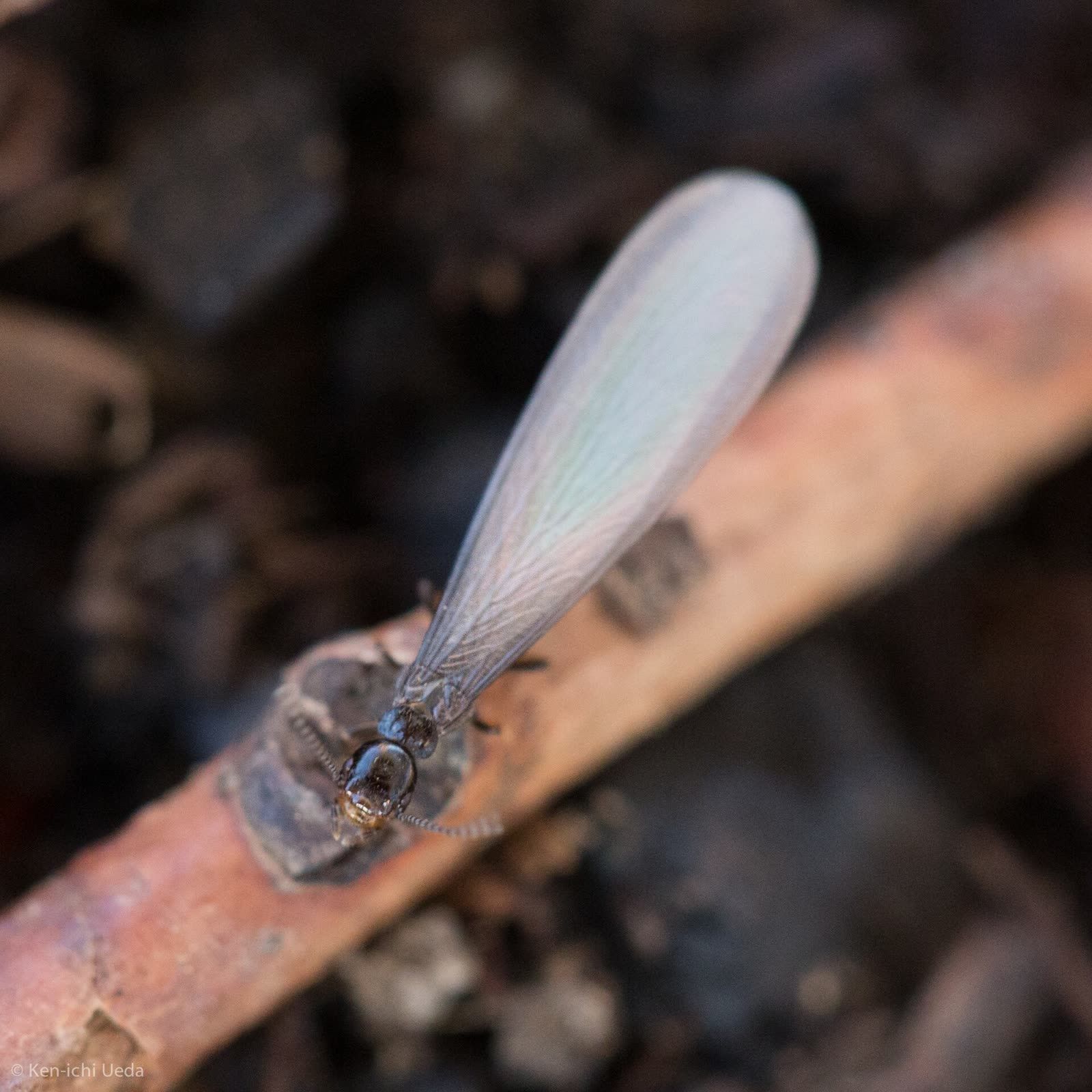

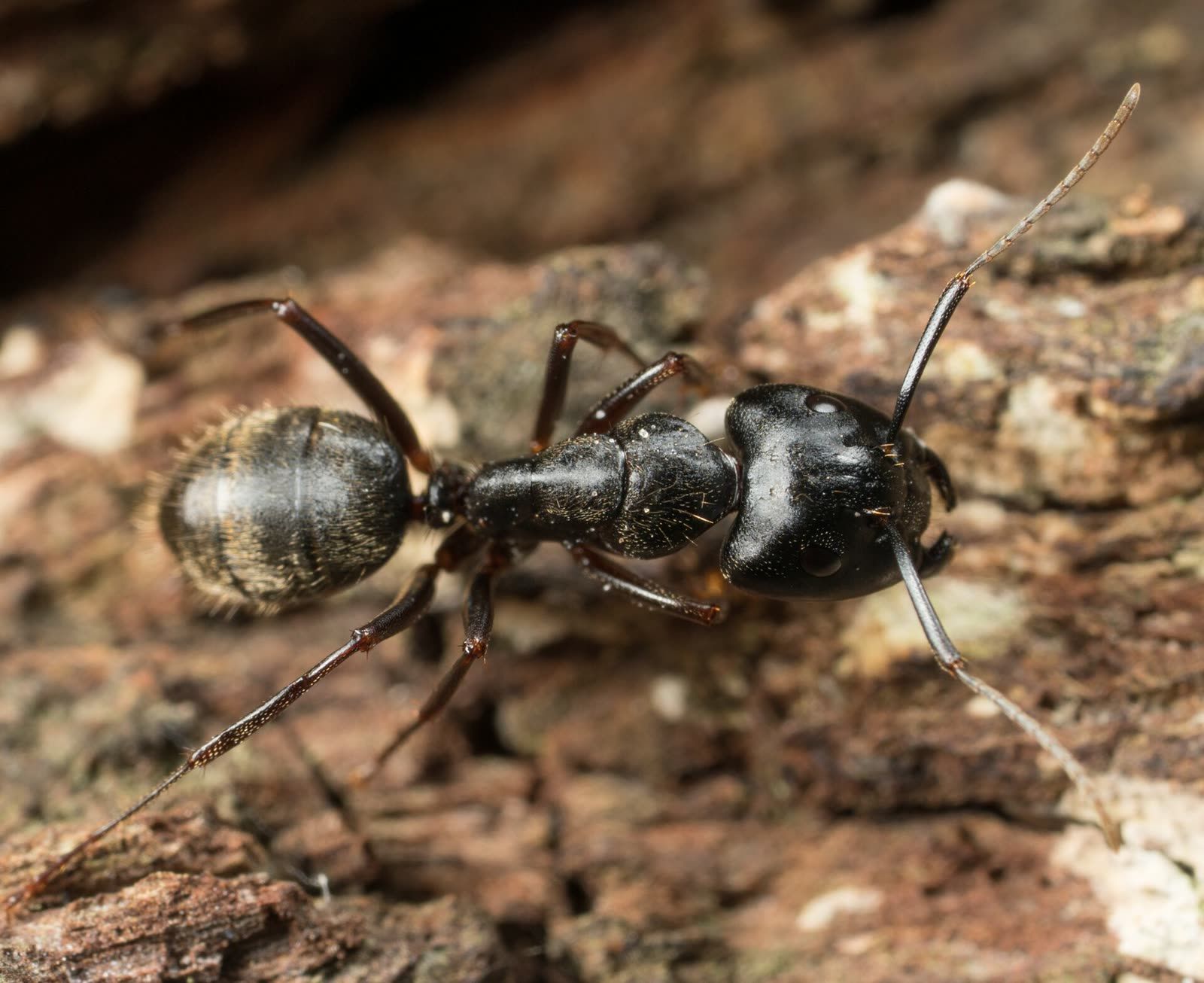

Help me decide
A swarmer is a winged termite or ant that left its colony to breed, and the two are easy to tell apart on three features. The University of Kentucky’s extension entomology lays it out: “Termites have straight antennae, a uniformly thickened waist, and wings of equal size. Conversely, ants have elbowed antennae, constricted waists, and forewings that are longer than the hind wings.”
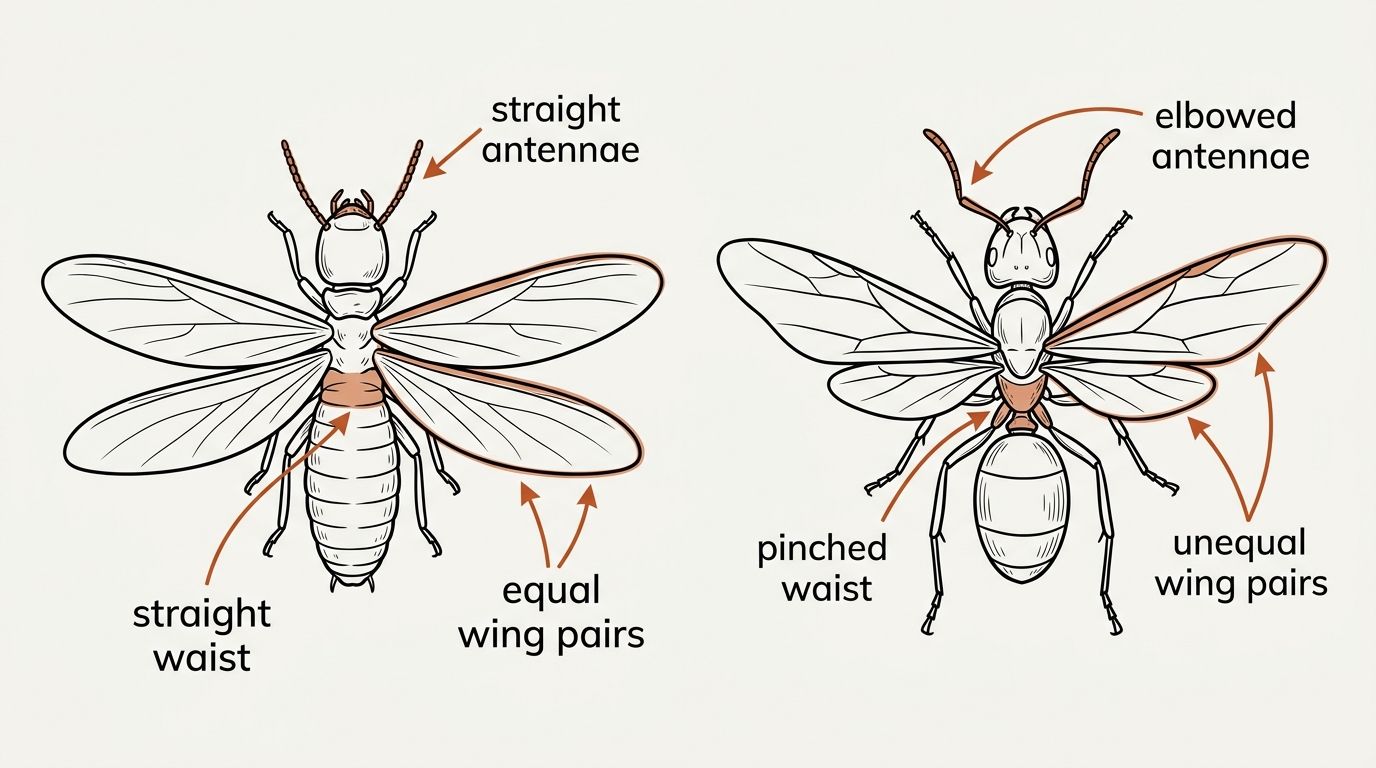
Color will not settle it. Both run from mid-brown to nearly black. Shape does the work, and any two of the three features agreeing is enough to call it. Which does the insect in front of you match?
What it points to
This looks like a termite swarmer
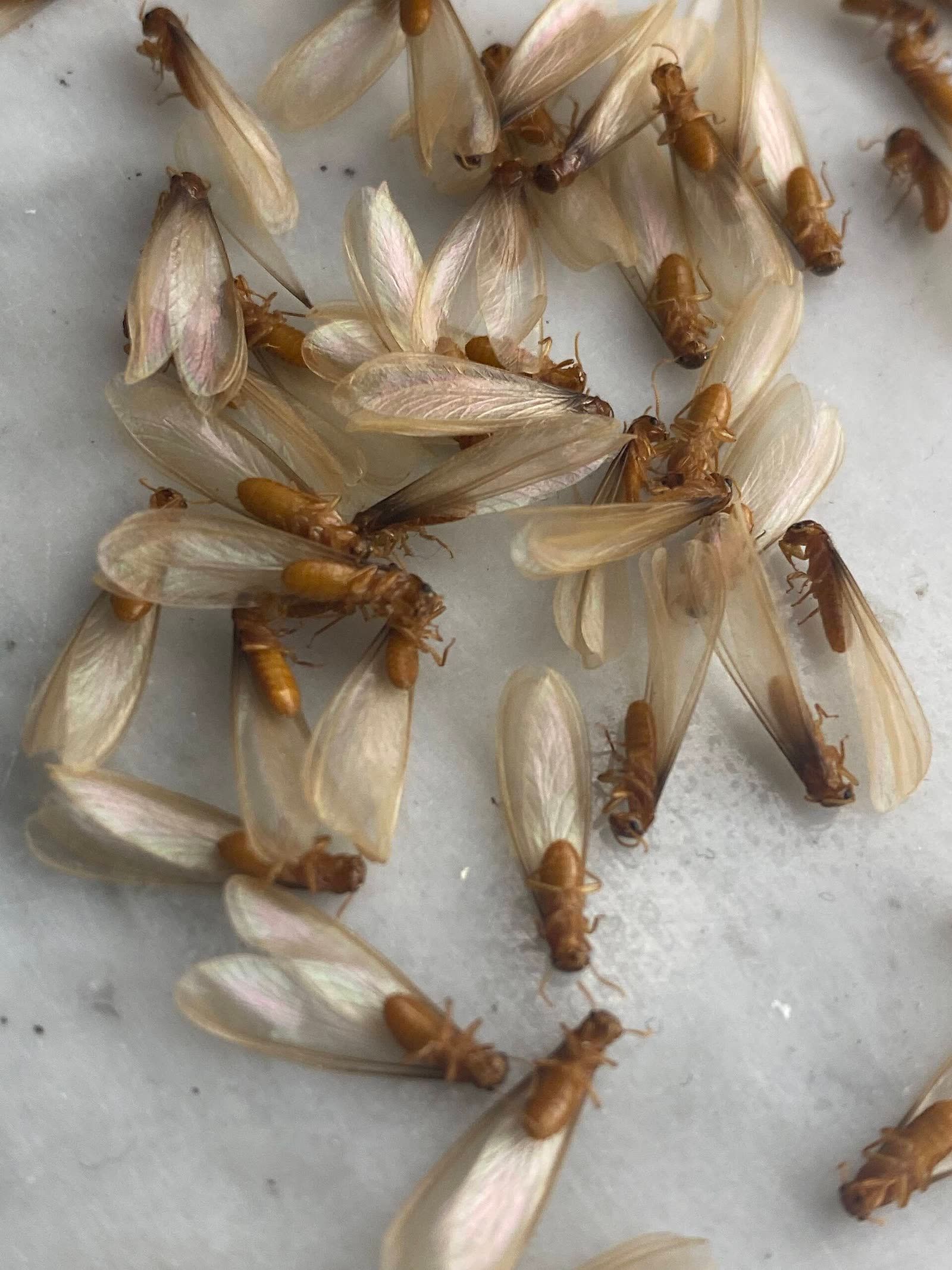
Straight antennae, a uniform waist, and four equal wings are the termite combination. The winged ones on your sill cannot damage wood. The University of Kentucky notes swarmers that emerge indoors “are incapable of damaging wood and only live for about a day.” They are a signal, not the problem itself.
Where did they come out? This part matters
Indoors, from a wall, baseboard, or window frame: the University of Kentucky puts it plainly: “discovering winged termites indoors almost always indicates an infestation warranting treatment.” Treat that as a colony in or under the structure and arrange an inspection in the next few days.
Outdoors, from a stump, woodpile, or mulch in the yard:the same source notes these “are not necessarily cause for concern, and do not automatically mean the house is infested.” Termites live in the soil across most of the country, and a yard swarm is often just spring doing what it does.

If it is a termite, which termite
The group decides the treatment and the bill. Mud tubes on a foundation point tosubterranean termites, the most widespread group. Hard six-sided pellets with no tubes point todrywood termites. A heavy evening swarm around outdoor lights on the Gulf Coast is worth checking againstFormosan termitesbefore you assume it is the native kind. The fullflying ants vs termite swarmersguide walks the check again in more detail.
Before you do anything else
Put a sample in a ziplock bag, and photograph it on something white next to a coin for scale. Whoever looks at it next — you, in better light, or someone you call — will want that photo.
You have time. Termites damage wood slowly, and a day or a week spent getting this right costs you almost nothing. This is not a tonight problem.
Read next
- Flying ants vs termite swarmers: the full two-minute check
- Termite types: which group you are dealing with
- Termite inspections: what happens if you call
This is a read on what the visible signs point to, not a diagnosis of your house. There is no way to judge how far along a termite problem is from a photo or a description. If the wood is structural, or you cannot tell what you are looking at, that is the point for an in-person inspection.
What it points to
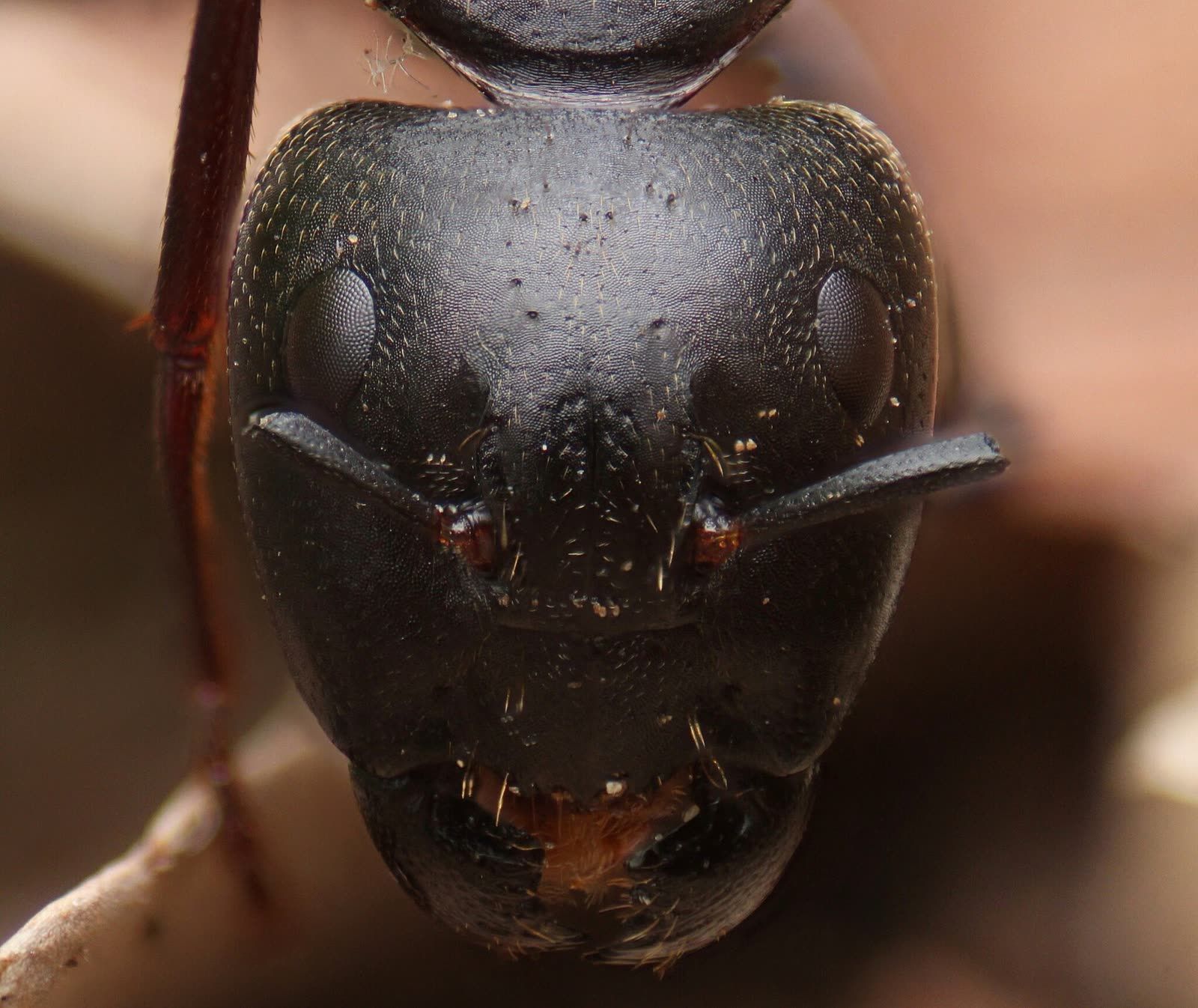
This looks like a flying ant, not a termite
A bent antenna, a pinched waist, and one pair of wings longer than the other are the ant combination. That is the good version of this to find, because most ants do nothing to your framing.
The one exception is the carpenter ant, which tunnels into wood to nest. It does not eat it. It leaves coarse, stringy shavings mixed with dead insect parts rather than the packed soil or hard pellets a termite leaves, and finding one usually means finding a damp or rotting piece of wood it moved into.

Before you do anything else
Put a sample in a ziplock bag, and photograph it on something white next to a coin for scale. Whoever looks at it next — you, in better light, or someone you call — will want that photo.
You have time. Termites damage wood slowly, and a day or a week spent getting this right costs you almost nothing. This is not a tonight problem.
Read next
- Carpenter ants vs termites: the damage, the debris, the fix
- Flying ants vs termite swarmers: run the check again
This is a read on what the visible signs point to, not a diagnosis of your house. There is no way to judge how far along a termite problem is from a photo or a description. If the wood is structural, or you cannot tell what you are looking at, that is the point for an in-person inspection.
Pellets or “sawdust”
Look closely at the grains
Look at the grains up close. A hand lens or your phone camera’s zoom is enough. Which does yours look most like?


Help me decide
What the little pile is made of tells you most of the story, and the three common sources look different up close. One thing to rule in early: subterranean termites do not leave a loose pile like this at all. They pack their galleries with soil and build mud tubes, so a pile of dry grains points away from them.
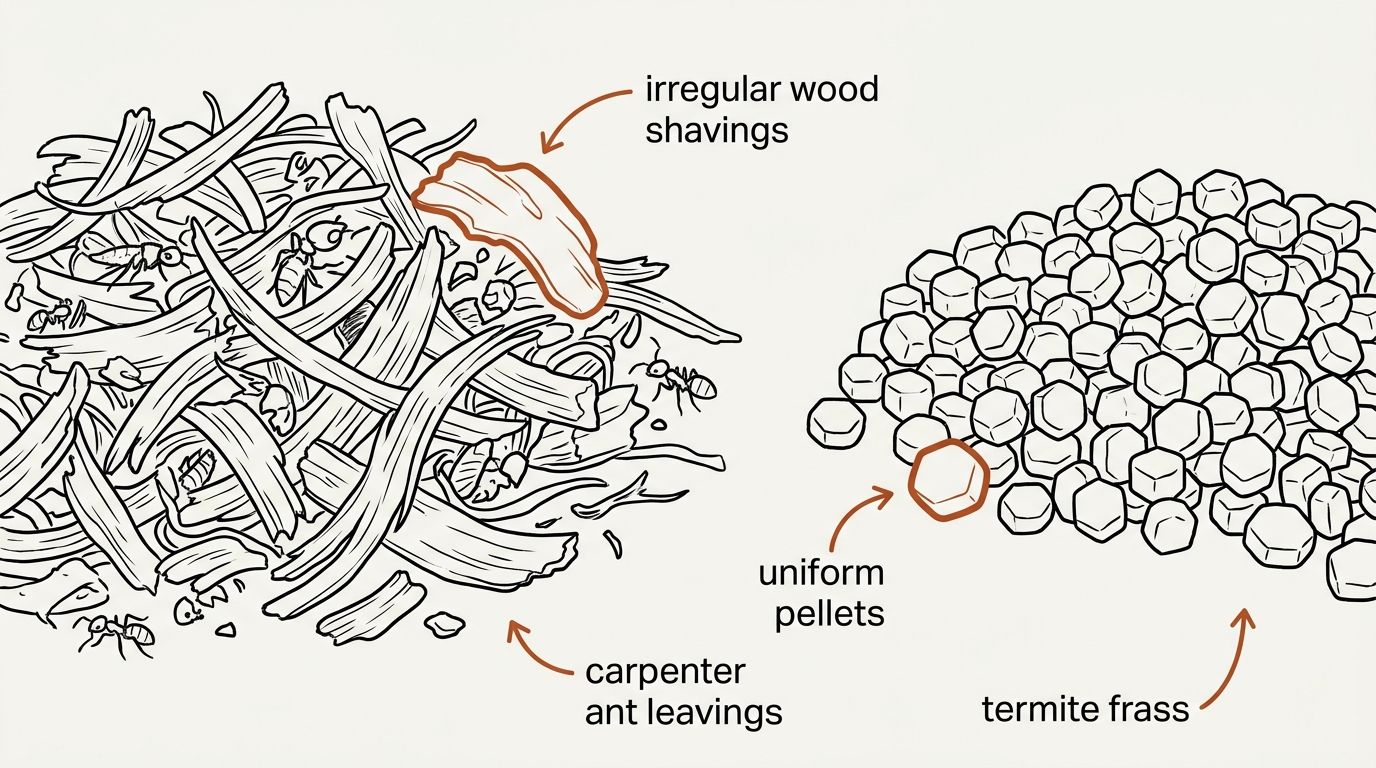
- Hard, uniform, six-sided grains, like coarse sandRidged pellets in cream, tan, red, or near-black, in a small pile under a pinhole.
- Coarse, stringy shavings with insect partsFibrous scrapings, not grains, often with bits of dead insect mixed in.
- Very fine, flour-like powder near tiny round holesTalc-fine dust that sifts out of small, clean, round holes in the wood surface.
What it points to
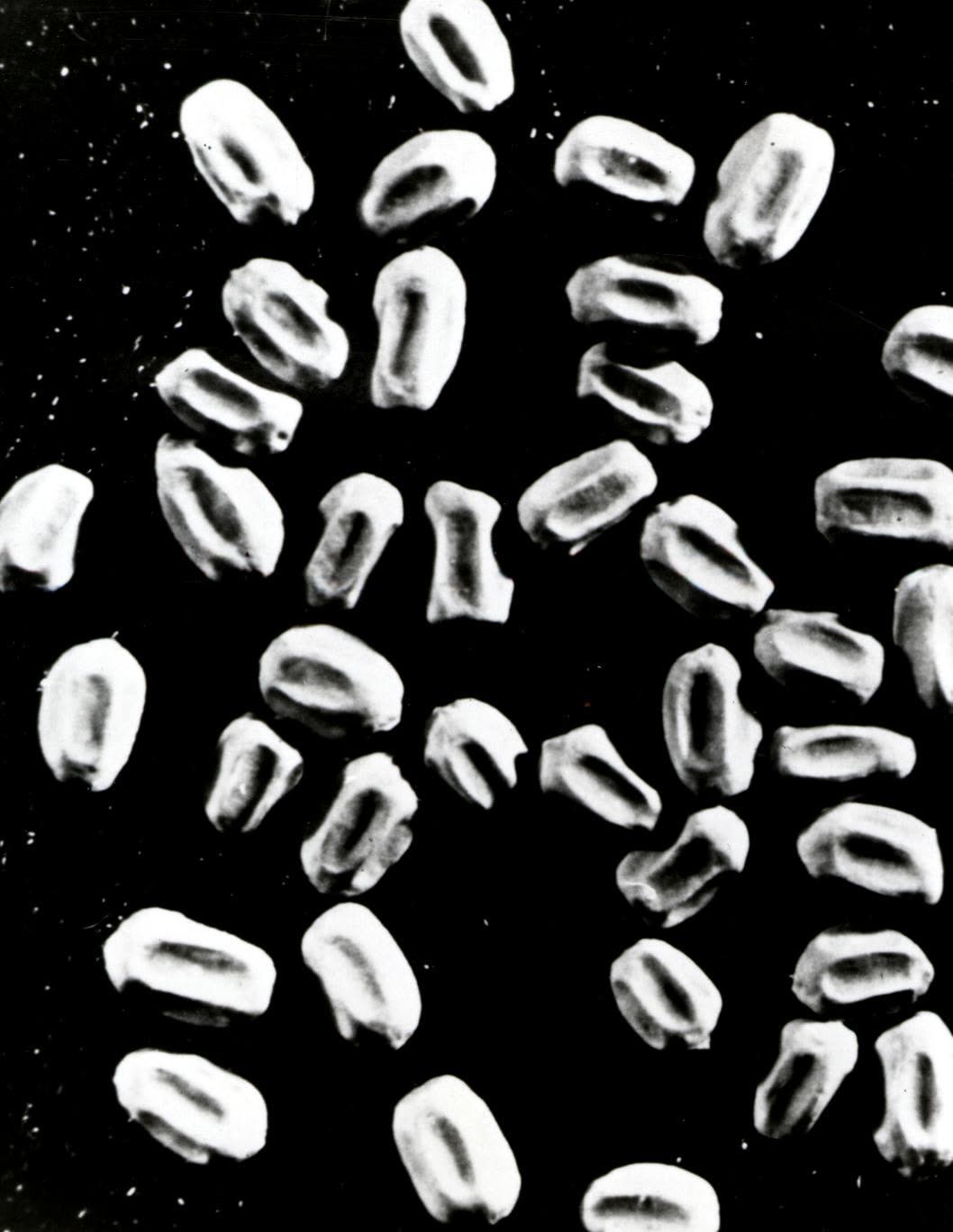
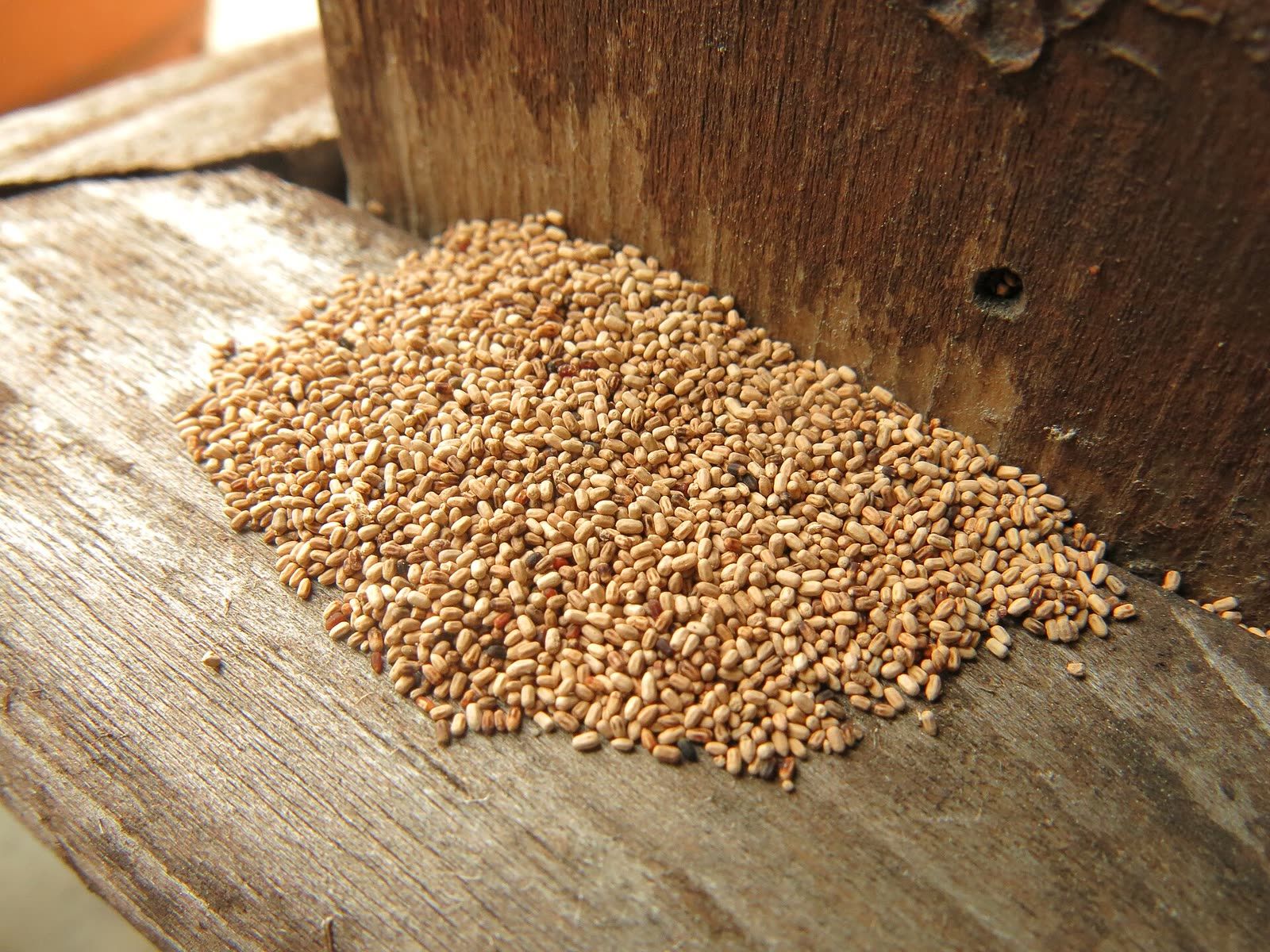
Hard six-sided pellets point to drywood termites
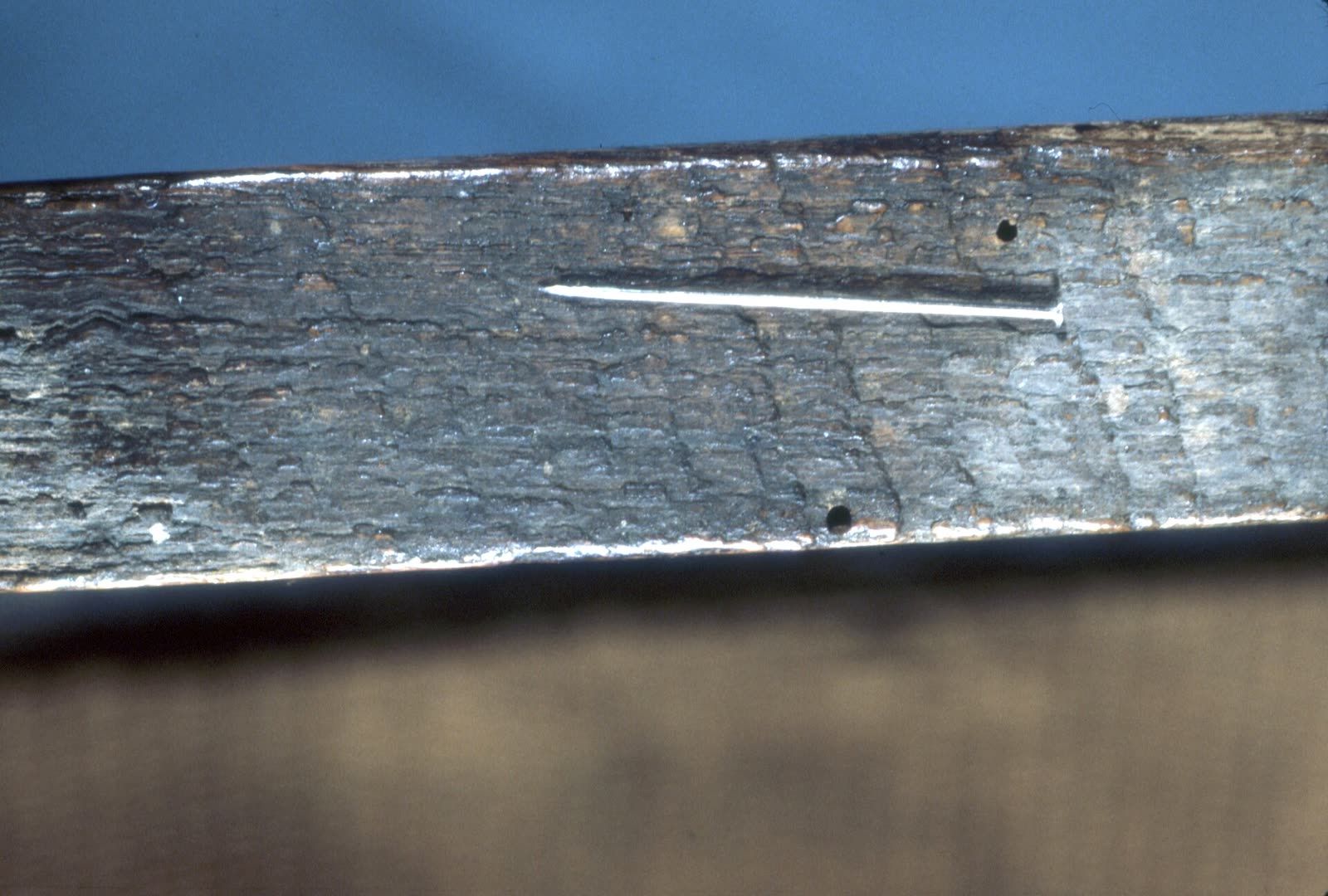
UC IPM says drywood droppings “have six hexagonal sides and are diagnostic for drywood termites,” in colors from cream to red to black. The termites push them out through “kick-out” holes under 2 millimetres across, so the pellets collect in a small pile below. The tell people miss: the pile comes back a day after you sweep it, and each grain is a hard, ridged, six-sided pellet under a lens rather than a soft flake.
Drywood termites live entirely inside dry wood with no soil contact, which is why they turn up in an attic rafter or a piece of furniture. They are a warm-climate concern, heaviest in southern Florida, Hawaii, the Gulf, and across California and the Southwest. In a cold inland state, a small pile of dust is more often a powderpost beetle.

Before you do anything else
Put a sample in a ziplock bag, and photograph it on something white next to a coin for scale. Whoever looks at it next — you, in better light, or someone you call — will want that photo.
You have time. Termites damage wood slowly, and a day or a week spent getting this right costs you almost nothing. This is not a tonight problem.
Read next
- Termite droppings vs sawdust: reading a single grain
- Drywood termites: biology, signs, and how they are treated
- Subterranean vs drywood: why the difference decides the bill
- Termite treatment: what a drywood job involves
This is a read on what the visible signs point to, not a diagnosis of your house. There is no way to judge how far along a termite problem is from a photo or a description. If the wood is structural, or you cannot tell what you are looking at, that is the point for an in-person inspection.
What it points to
Coarse shavings point to carpenter ants, not termites
Penn State Extension describes carpenter-ant leavings as “piles of coarse, stringy wood particles, dead insect parts, and other debris.” The dead insect parts are the giveaway. Termites do not mix their dead into a sawdust pile. Carpenter ants tunnel wood to nest in it; they do not eat it, so the waste ends up outside the nest where you can see it.
Penn State notes they “seldom tunnel into dry, sound wood” and will not infest wood under 15 percent moisture, so finding them usually means finding a leak: a gutter dumping against the wall, a wet sill, a rotted rafter end. The moisture repair matters as much as the ants.
Before you do anything else
Put a sample in a ziplock bag, and photograph it on something white next to a coin for scale. Whoever looks at it next — you, in better light, or someone you call — will want that photo.
You have time. Termites damage wood slowly, and a day or a week spent getting this right costs you almost nothing. This is not a tonight problem.
Read next
- Carpenter ants vs termites: telling the insects apart
- Termite droppings vs sawdust: shavings, pellets and powder side by side
- Termite vs carpenter ant damage: what is inside the galleries
This is a read on what the visible signs point to, not a diagnosis of your house. There is no way to judge how far along a termite problem is from a photo or a description. If the wood is structural, or you cannot tell what you are looking at, that is the point for an in-person inspection.
What it points to
Fine powder and round holes point to a wood beetle
Flour-fine dust sifting from small, clean, round holes is the signature of powderpost beetles, not termites. It is the easiest of these to confuse with drywood termite pellets, and the difference is the grain: beetle dust is a soft, talc-like powder, while drywood pellets are hard, six-sided, and gritty between your fingers. UC IPM uses that six-sided shape as the line between the two.
This is usually the less expensive answer to get. It is still worth confirming the grains under a lens, because “fine powder” and “coarse pellets” are exactly what people mix up, and the treatment is different.
Before you do anything else
Put a sample in a ziplock bag, and photograph it on something white next to a coin for scale. Whoever looks at it next — you, in better light, or someone you call — will want that photo.
You have time. Termites damage wood slowly, and a day or a week spent getting this right costs you almost nothing. This is not a tonight problem.
Read next
- Termite droppings vs sawdust: flour, meal or grit narrows the beetle down
- Subterranean vs drywood: and how to be sure it is not a beetle
- Drywood termites: the pellets these dust piles get confused with
This is a read on what the visible signs point to, not a diagnosis of your house. There is no way to judge how far along a termite problem is from a photo or a description. If the wood is structural, or you cannot tell what you are looking at, that is the point for an in-person inspection.
What it points to
Mud tubes point to subterranean termites
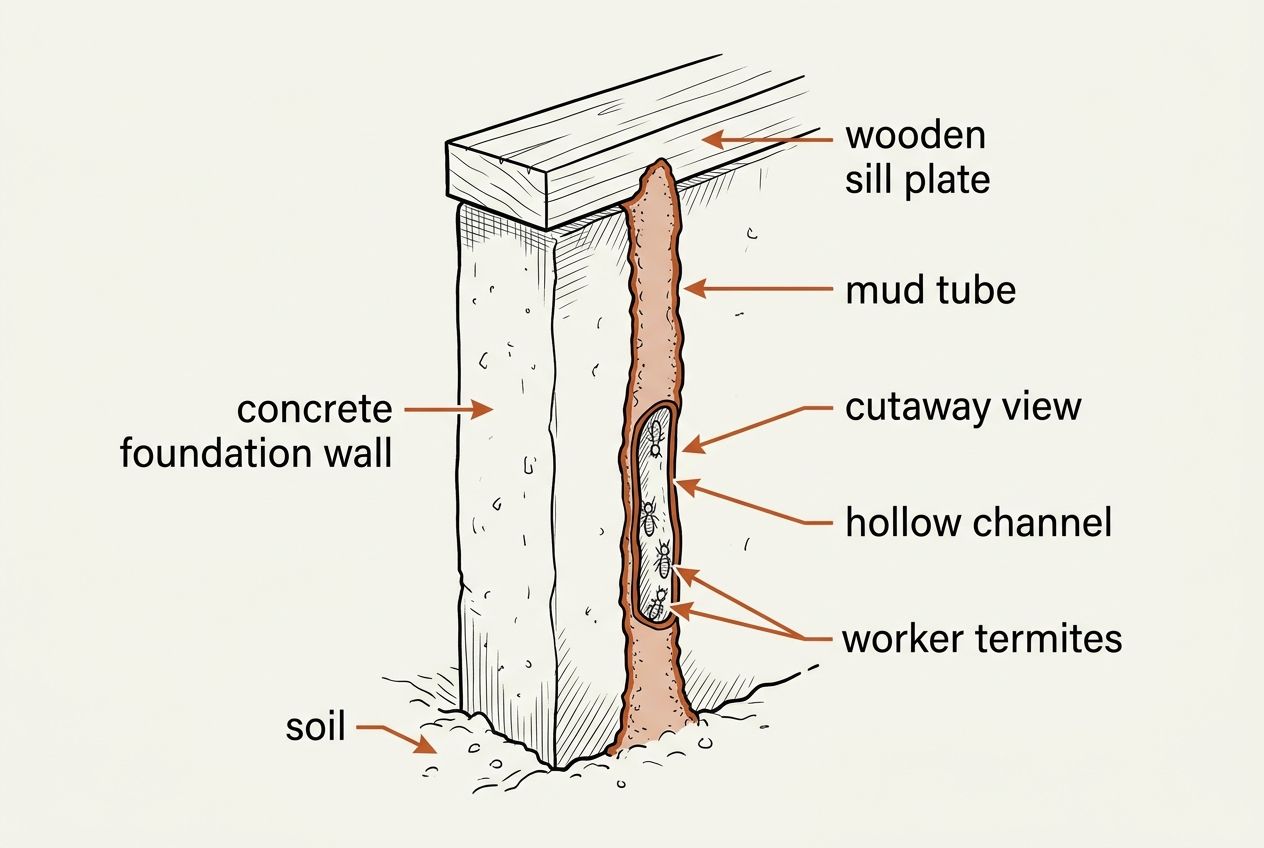
A mud tube is a covered runway about the width of a pencil, running up a foundation wall, a crawlspace pier, or anywhere wood meets soil. UC IPM describes these earthen tubes as built “using saliva mixed with soil and bits of wood,” and UF/IFAS calls them “the equivalent of highways connecting the underground termite population with aboveground food sources.” If you see one, the colony is living in the ground and commuting up, and that is what makes it subterranean.
One test worth doing: break a short section of the tube away. If it is rebuilt within a few days, the colony is active. If it stays open, it may be an old tube from a previous infestation.
One honest caution: a few other insects, including some ants, build soil tubes on foundations that look much like termite mud tubes to the naked eye. If the tube is the only sign and you are not certain, that is a question for an inspection rather than a guess.

Most subterranean cases are the native kind, treated by breaking the colony’s link to the soil with a liquid barrier or a bait system. On the Gulf Coast, an unusually aggressive, fast-spreading case is worth checking against the Formosan subtype before treatment.
Before you do anything else
Put a sample in a ziplock bag, and photograph it on something white next to a coin for scale. Whoever looks at it next — you, in better light, or someone you call — will want that photo.
You have time. Termites damage wood slowly, and a day or a week spent getting this right costs you almost nothing. This is not a tonight problem.
Read next
- Termite mud tubes: the four kinds, and how to test one
- Subterranean termites: the group behind the mud tubes
- Formosan termites: the aggressive Gulf Coast subtype
- Termite treatment: barrier vs bait for a soil colony
This is a read on what the visible signs point to, not a diagnosis of your house. There is no way to judge how far along a termite problem is from a photo or a description. If the wood is structural, or you cannot tell what you are looking at, that is the point for an in-person inspection.
Live insects, no wings
Pale and soft, or dark and hard?
Wingless insects in damaged wood are usually one of two things, and they look quite different.
Help me decide
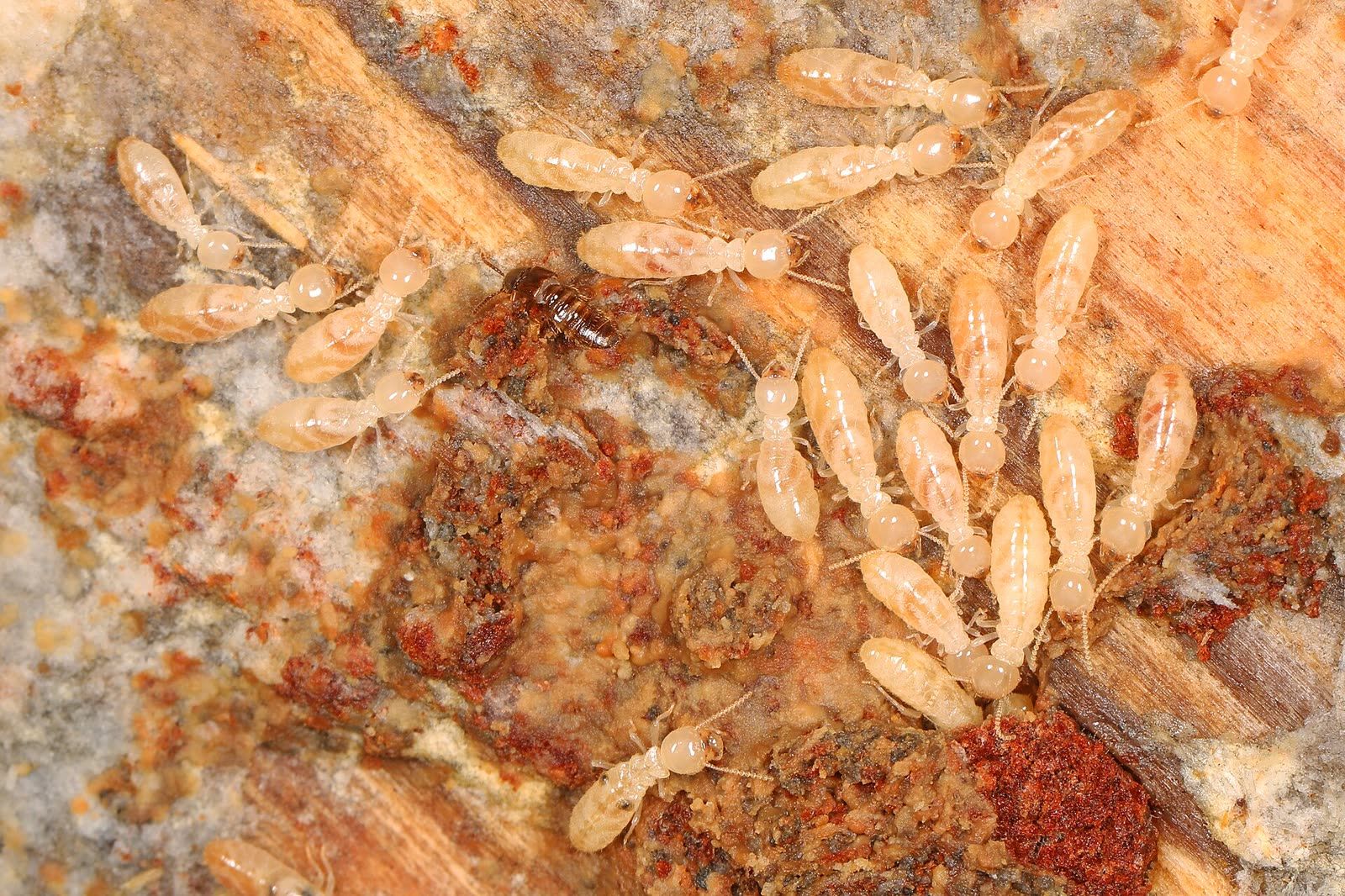
Termite workers are pale, close to white or cream, soft-bodied, with no waist, and they retreat from light the moment you open the wood up. Ants are darker and harder-shelled, move confidently in the open, and have the pinched, wasp-like waist a termite never has.
What it points to
Pale, soft, wingless insects point to termite workers
Termite workers do the feeding and the damage, and they stay hidden inside wood and tubes, which is why they are usually seen only when a piece of wood is opened or a tube is broken. If they are near the soil line, a foundation, or a mud tube, the likeliest answer is subterranean termites, the group that nests in the ground and reaches wood from below.
Before you do anything else
Put a sample in a ziplock bag, and photograph it on something white next to a coin for scale. Whoever looks at it next — you, in better light, or someone you call — will want that photo.
You have time. Termites damage wood slowly, and a day or a week spent getting this right costs you almost nothing. This is not a tonight problem.
Read next
- Subterranean termites: nesting, signs, and treatment
- Subterranean vs drywood: narrowing it further
- Termite inspections: confirming what you found
This is a read on what the visible signs point to, not a diagnosis of your house. There is no way to judge how far along a termite problem is from a photo or a description. If the wood is structural, or you cannot tell what you are looking at, that is the point for an in-person inspection.
What it points to
A hard-bodied, pinch-waisted insect is an ant
The pinched waist and the hard shell rule out a termite. If the ant is in or near damaged wood, the one to check for is the carpenter ant, which nests in wood, usually wood a leak has already softened, and pushes coarse shavings out rather than eating it. Most other ants in the house are a nuisance rather than a structural problem.
Before you do anything else
Put a sample in a ziplock bag, and photograph it on something white next to a coin for scale. Whoever looks at it next — you, in better light, or someone you call — will want that photo.
You have time. Termites damage wood slowly, and a day or a week spent getting this right costs you almost nothing. This is not a tonight problem.
Read next
This is a read on what the visible signs point to, not a diagnosis of your house. There is no way to judge how far along a termite problem is from a photo or a description. If the wood is structural, or you cannot tell what you are looking at, that is the point for an in-person inspection.
Damaged wood, no other sign
Damage alone will not tell you what caused it
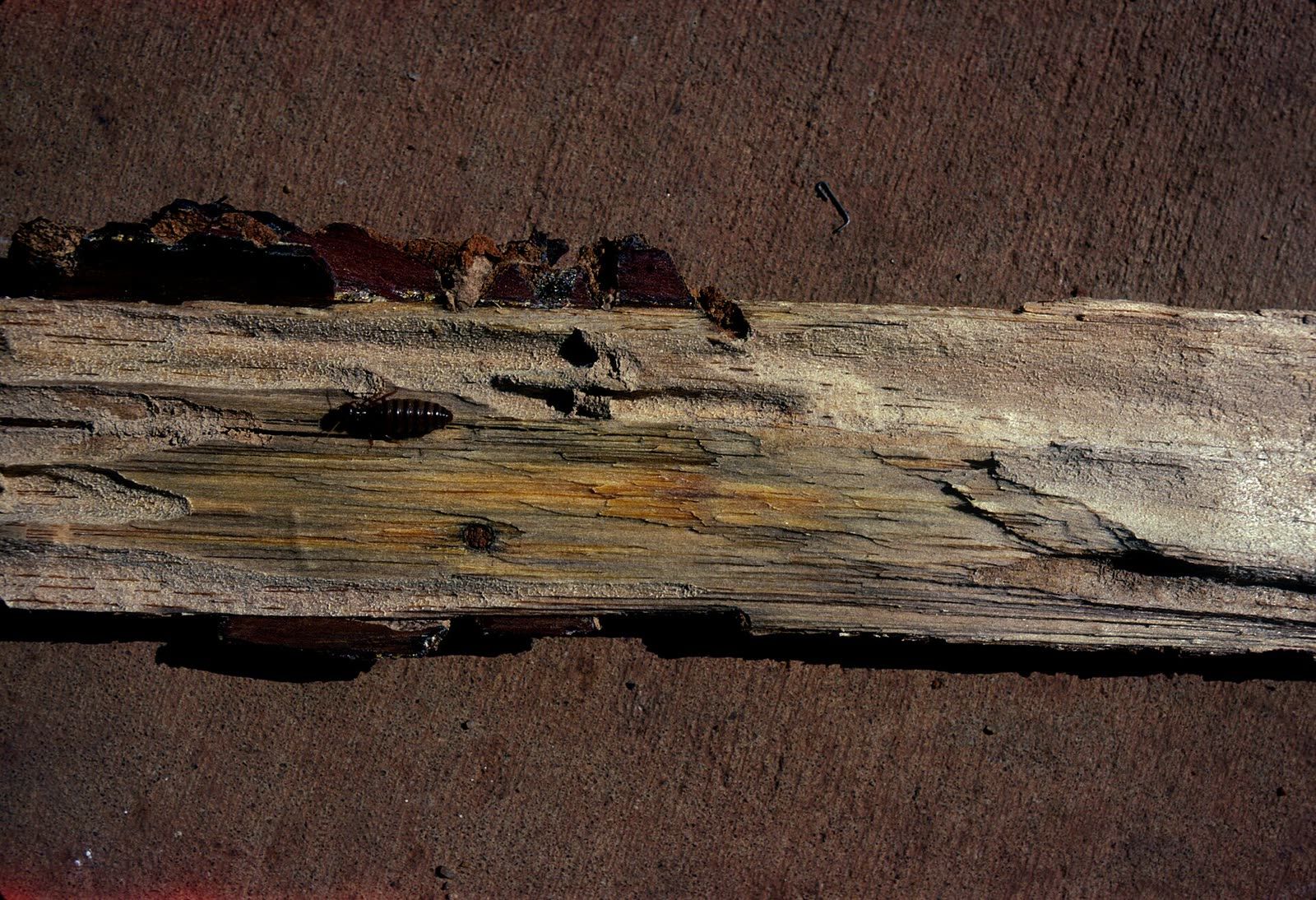
This is the honest answer: hollow-sounding or crumbling wood, on its own, is consistent with termites, with carpenter ants, with a wood-boring beetle, or with plain water rot, and no photo of the damage separates them. What separates them is the sign the culprit leaves nearby, so it is worth a short look before you call anyone.
Two things to check, with a screwdriver and a flashlight:
- Probe the wood. EPA suggests probing suspect wood. Soft spots and hollow galleries just under a firm shell are typical of an active problem, not old surface weathering.
- Look at the foundation and soil line for pencil-width mud tubes, and below any pinholes in trim or rafters for small piles of pellets or dust. Those are the signs that point somewhere specific.

Found a tube, a pellet pile, or a live insect while you looked? Run that through the scan. It will point somewhere. Found nothing but the damage? That is the case an in-person inspection is actually for.
Before you do anything else
Put a sample in a ziplock bag, and photograph it on something white next to a coin for scale. Whoever looks at it next — you, in better light, or someone you call — will want that photo.
You have time. Termites damage wood slowly, and a day or a week spent getting this right costs you almost nothing. This is not a tonight problem.
Read next
- Termite vs carpenter ant damage: reading the opened wood
- Signs of termites: what each sign settles, and what it leaves open
- Termite inspections: what a WDI inspection covers
- Termite types: what each group leaves behind
This is a read on what the visible signs point to, not a diagnosis of your house. There is no way to judge how far along a termite problem is from a photo or a description. If the wood is structural, or you cannot tell what you are looking at, that is the point for an in-person inspection.
How Termite Scan works
This walkthrough routes on the signs you can actually see: the shape of a swarmer, the grain of a pellet pile, a mud tube, or the look of a live insect. It sends you to the page that covers whatever those point to. Every step follows the same identification facts published by university extension services, the EPA, and UC IPM. Those sources are listed and linked at the bottom of this page. I built it to narrow the question, not to close it: it tells you which problem you most likely have, so you know what to read and what to ask.
There is no photo upload yet, and I would rather not add one until it earns its place. A picture identification that is confidently wrong is worse than none, because “not termites” on a real infestation and “termites” on coffee grounds both cost you. When it can be measured against a labelled set of real photos and shown to hold up, it goes in, and the accuracy numbers go on this page with it. Last updated August 2026.
What it cannot tell you
- How bad it is. Nobody can judge the extent of an infestation from a photo or a description, and neither can this.
- The exact species. Insects that look identical to the eye can need a hand lens to separate, and the difference sometimes changes the treatment.
- Whether your house needs treatment. That is a decision for an in-person inspection of your actual property.
Want a person to look instead?
Describe what you found, or send the photo you took, and you will get a plain read on what it points to. It goes to one inbox and nowhere else, the same address on thecontact page. There is more about what happens to it on theget-help page. No charge, and nothing to sign.
Sources
- Termite Control: Answers for Homeowners (ENTFACT-604)— Michael F. Potter, University of Kentucky Entomology, revised March 2026. The swarmer check, the indoor-vs-yard distinction, and the pace of damage. Accessed 2026-08-03.
- Subterranean and Other Termites (Pest Notes 7415)— UC Statewide IPM Program, revised May 2014. Mud tubes, soil connection. Accessed 2026-08-03.
- Drywood Termites (Pest Notes 7440)— UC Statewide IPM Program, revised August 2014. Six-sided pellets, kick-out holes. Accessed 2026-08-03.
- Carpenter Ants (Pest Notes 7416)— UC Statewide IPM Program, revised August 2009. Sawdust vs six-sided pellets. Accessed 2026-08-03.
- Carpenter Ants— Penn State Extension, updated 2026-06-24. Coarse stringy debris, moisture, smooth galleries. Accessed 2026-08-03.
- Native Subterranean Termites (EENY-212)— University of Florida IFAS Extension, Featured Creatures. Mud tubes as highways; range. Accessed 2026-08-03.
- West Indian Drywood Termite (EENY-079)— University of Florida IFAS Extension, Featured Creatures. Colony lives entirely within wood. Accessed 2026-08-03.
- Termites: How to Identify and Control Them— US Environmental Protection Agency, last updated 2025-10-21. Swarmer wings and antennae; probing wood. Accessed 2026-08-03.