 Termite Registry
identification
Flying Ants vs Termite Swarmers: How to Tell
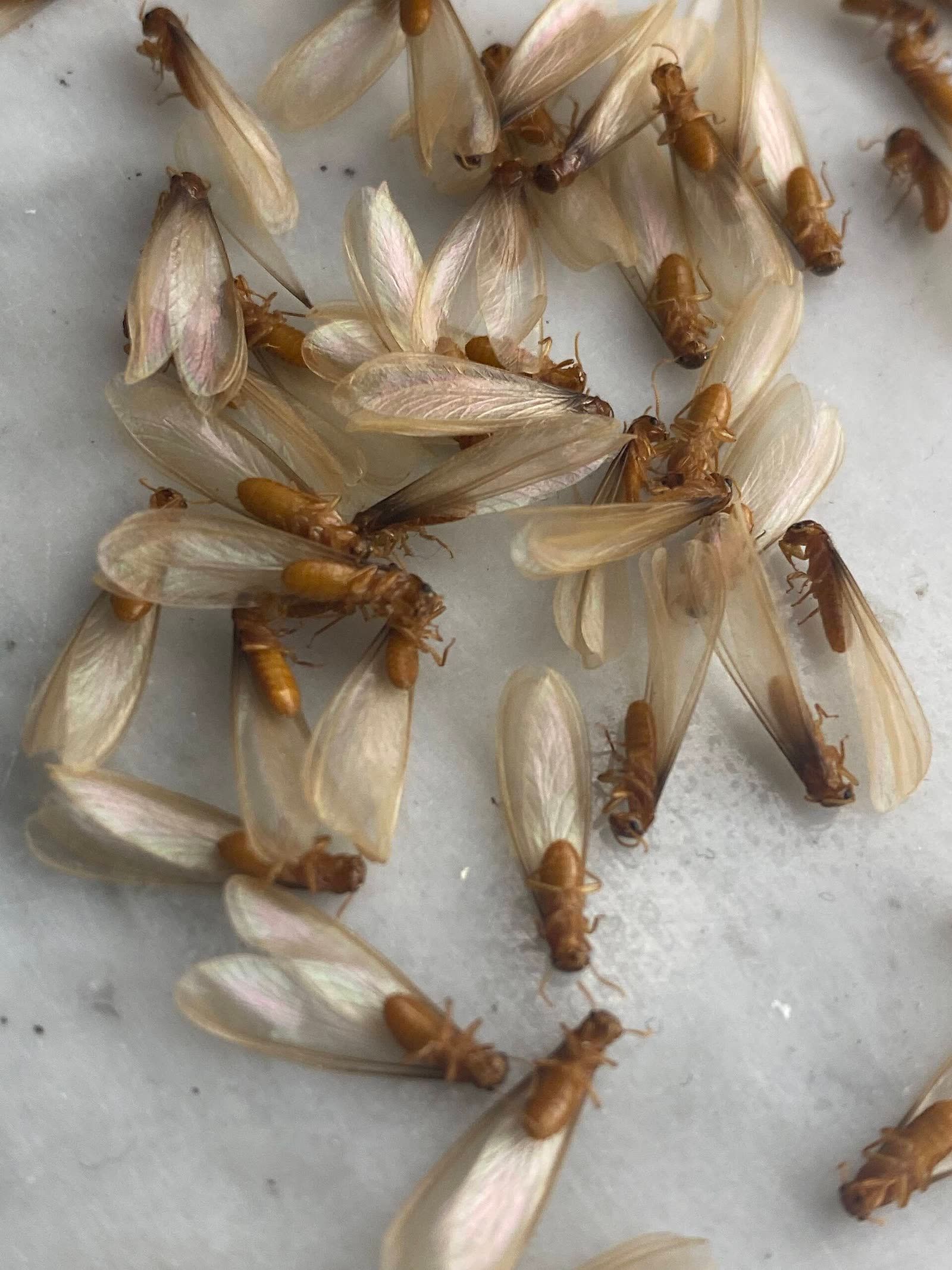

A swarmer is a winged termite or ant that left its colony to breed, and a pile of them on a windowsill is what most people find first. Straight antennae, a thick waist, and four equal wings mean termite. A bent antenna, a pinched waist, and one longer pair of wings mean an ant.
Winged insects indoors in spring is one of the most common things people find, and it is not something you have to settle tonight. Catch one, look at it, and read on. You have time.
Start with a bag and a coin, not a phone call
Before anything else, catch a few. Put them in a ziplock bag or a small jar, then photograph one on something white next to a penny for scale. Then keep reading.
The winged ones cannot hurt the house. According to the University of Kentucky’s extension entomology, termite swarmers that emerge inside “are incapable of damaging wood and only live for about a day.” What they are is a signal, and a signal keeps until morning.
A specimen in a bag beats a smear on the sill. A live one photographed on white is easy to compare against everything below.
The three-part check: antennae, waist, wings
Here is the whole test in one line, from the University of Kentucky’s extension entomology: “Termites have straight antennae, a uniformly thickened waist, and wings of equal size. Conversely, ants have elbowed antennae, constricted waists, and forewings that are longer than the hind wings.”
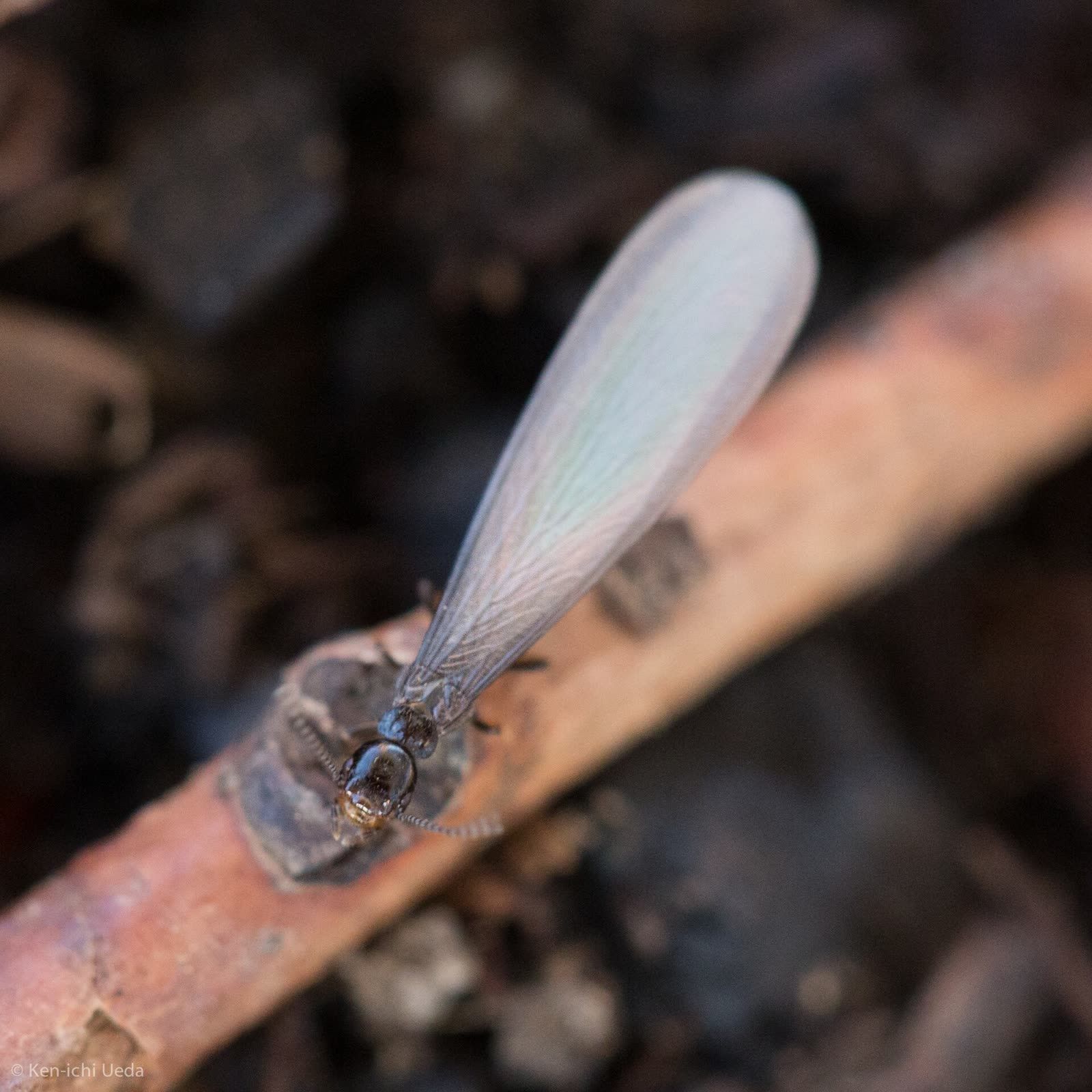

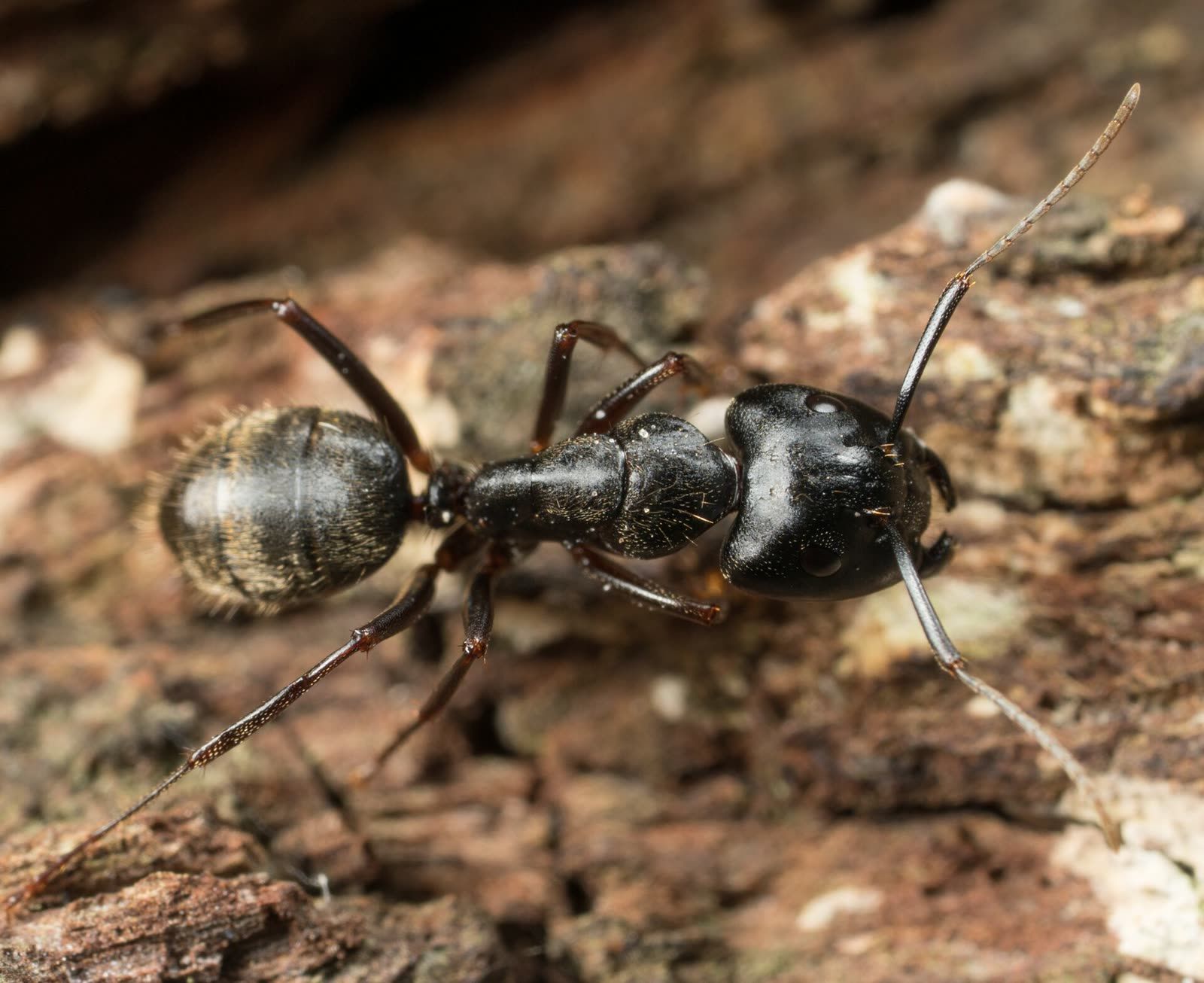

You will not need a microscope, just a bright lamp or your phone’s flashlight and camera zoom. Color will not settle it, because both termite and ant swarmers can run from mid-brown to nearly black. Shape is what does the work, and it is visible to the naked eye once the light is good.
Read it slowly against the insect in the bag, feature by feature. The antennae are the fastest tell. A termite’s run straight out, like tiny strings of beads, and may droop a little. An ant’s bend partway along, the way a jointed arm does at the elbow.
The waist is the next thing to check, and it is the one I trust most. A termite is the same width from its front to its rear, a straight tube with no pinch anywhere. An ant has a clear, wasp-like nip between its middle and its back end, the narrow waist you would draw on a cartoon ant.
Wings come last, and they only help if they are still attached. A termite carries four wings of the same length that reach well past its body and drop off at a touch. An ant’s front pair is plainly longer than the back pair, and they stay put. The EPA describes the same split: termite wings “roughly equal in length” with antennae “straight,” against an ant’s “front wings longer than the hind wings” and antennae “bent.”
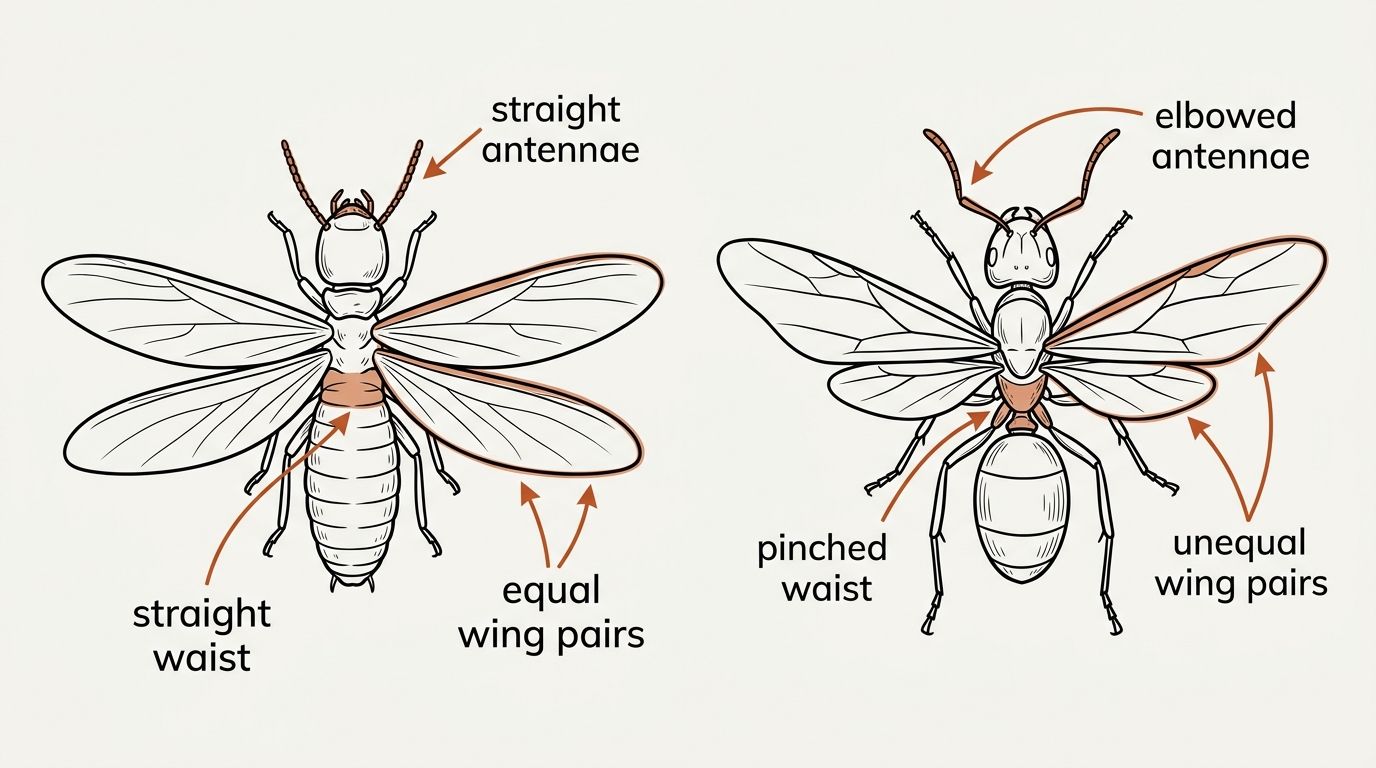
Any two of the three agreeing is enough to call it.
Where you found them changes what it means
What the insect is matters. Where it came out matters just as much.
A swarm that came out indoors is the finding that actually counts here, and it is worth being sure about. The University of Kentucky’s extension entomology puts it plainly: “Discovering winged termites indoors almost always indicates an infestation warranting treatment.” If confirmed termites came out of a wall, a baseboard, or a window frame from the inside, treat that as a colony in or under the structure.
A swarm out in the yard is a different story. The same source notes that termites “emerging from tree stumps, woodpiles, etc. out in the yard are not necessarily cause for concern, and do not automatically mean the house is infested.” Termites live in the soil across most of the country, and a yard swarm is often just the neighborhood doing what it does every spring.
So note where the pile is before you sweep it up. A dozen wings on the kitchen floor is a different conversation from a swarm around the woodpile by the fence.
Why it matters which one you have
A termite, a carpenter ant, and a harmless nuisance ant are three different problems with three different price tags. Naming one wrong costs money either way.
Miss a termite and call it an ant, and you leave a colony in the wood while you wipe down the counter. Call a harmless ant a termite, and you can pay four figures to treat framing that was never at risk. That is why the identification comes before the quote, not after.
Carpenter ants are the one ant that does damage wood. They hollow it out to nest in rather than eat it, and I cover them on their own page, because the signs and the treatment are a separate subject from termites.
Identify before anyone treats, because the wrong treatment is money set on fire.
How fast is this actually moving
Slowly. That is the honest answer, and it is the one the industry has the least reason to give you plainly.
Here it is from the University of Kentucky’s extension entomology: “Termites damage wood slowly; the amount of damage caused by taking an additional day, week, or month to make an informed decision generally is inconsequential.”
A colony that got into your subfloor this spring has not compromised your framing by tonight, or by next week. Moving slowly is not the same as not mattering. You have time to identify the insect, get more than one opinion, and read what you are signing before you commit any money. Anyone telling you to sign tonight is telling you something the biology does not support.
If it’s a termite, which termite
Once you have called it a termite, the next question is which kind, because the three you are likely to meet are treated differently and priced differently.
Mud tubes about the width of a pencil on a foundation or crawlspace wall point to subterranean termites, the most widespread group and the one behind most spring swarms. Small piles of hard, six-sided pellets with no mud tubes anywhere point to drywood termites, which live inside the wood and ignore the soil entirely. A dense evening swarm around outdoor lights on the Gulf Coast is worth checking against Formosan termites before you assume it is the native kind.
If you want a structured walk-through of what you found before you call anyone, the termite scan steps through it, and the full termite types index lays the groups out side by side.
Here’s what I’d actually do
Bag two or three of them, photograph one on white next to a penny, and note which room they came out of. That takes five minutes and it is the whole of the emergency.
Then I would run the antennae-and-waist check under a good light before I trusted the wings, because the wings are usually the first thing to fall off and the last thing to rely on. If it reads termite and they came from inside the house, I would arrange an inspection in the next few days, not the next few hours.
I would not decide the species from a phone photo, and I would not let anyone else decide a treatment from one either. Subterranean, drywood, and Formosan termites are different problems, and the wrong plan is the most expensive mistake in this whole subject. Keep the specimens. Let someone licensed confirm it in person, and get a second quote before you sign anything.
The one thing I would hold firm on is that this is not a tonight problem. Sleep on it. The bug in the bag will say exactly the same thing in the morning.
Sources
- Termite Control: Answers for Homeowners (ENTFACT-604) — Michael F. Potter, University of Kentucky Entomology, revised March 2026. Accessed 2026-08-02. All quoted lines attributed to the University of Kentucky on this page are taken from this document.
- Termites: How to Identify and Control Them — US Environmental Protection Agency, last updated 2025-10-21. Accessed 2026-08-02.
- Subterranean and Other Termites (Pest Notes 7415) — UC Statewide IPM Program, revised May 2014. Accessed 2026-08-02.
Common questions
All the wings fell off before I could look. Can I still tell?
Yes. The wings drop off almost as soon as the flight ends, so a pile of loose wings next to a wingless body is normal. You do not need them. The antennae and the waist settle it on their own: straight antennae and a body with no pinch mean a termite, while bent antennae and a nipped-in waist mean an ant. Keep the wings anyway, since a whole specimen is easier to read.
Should I spray the ones I found?
There is little point. The winged swarmers on your sill cannot damage wood and are dead within about a day on their own, so spraying the visible ones changes nothing about whether a colony is in the structure. It also ruins them as specimens. Catch a few for identification instead, and if it turns out to be termites, the treatment that matters targets the colony, not the handful that flew toward the window.
Is a phone photo enough to identify them?
A photo on a white background next to a coin is great for your own two-minute check and useful to show whoever you call. It is not as reliable as the insect itself. Species that look identical in a photo can be told apart under a hand lens, and the difference sometimes changes the treatment. Take the photo, and keep the actual specimens in a bag so an in-person identification is still possible.
- identification
- swarmers
- flying ants
Related reading
identification
Carpenter Ants vs. Termites: Telling Them Apart
Termites are insects that eat wood for the cellulose in it; carpenter ants are large ants that do not eat wood at all, but tunnel into it to make a nest and dump the shavings back out.
identification
Subterranean vs Drywood Termites: Which You Have
Subterranean termites nest in the soil and reach your wood through mud tubes; drywood termites live entirely inside dry wood and touch no soil at all.