 Termite Registry
identification
White Ants or Termites? How to Tell
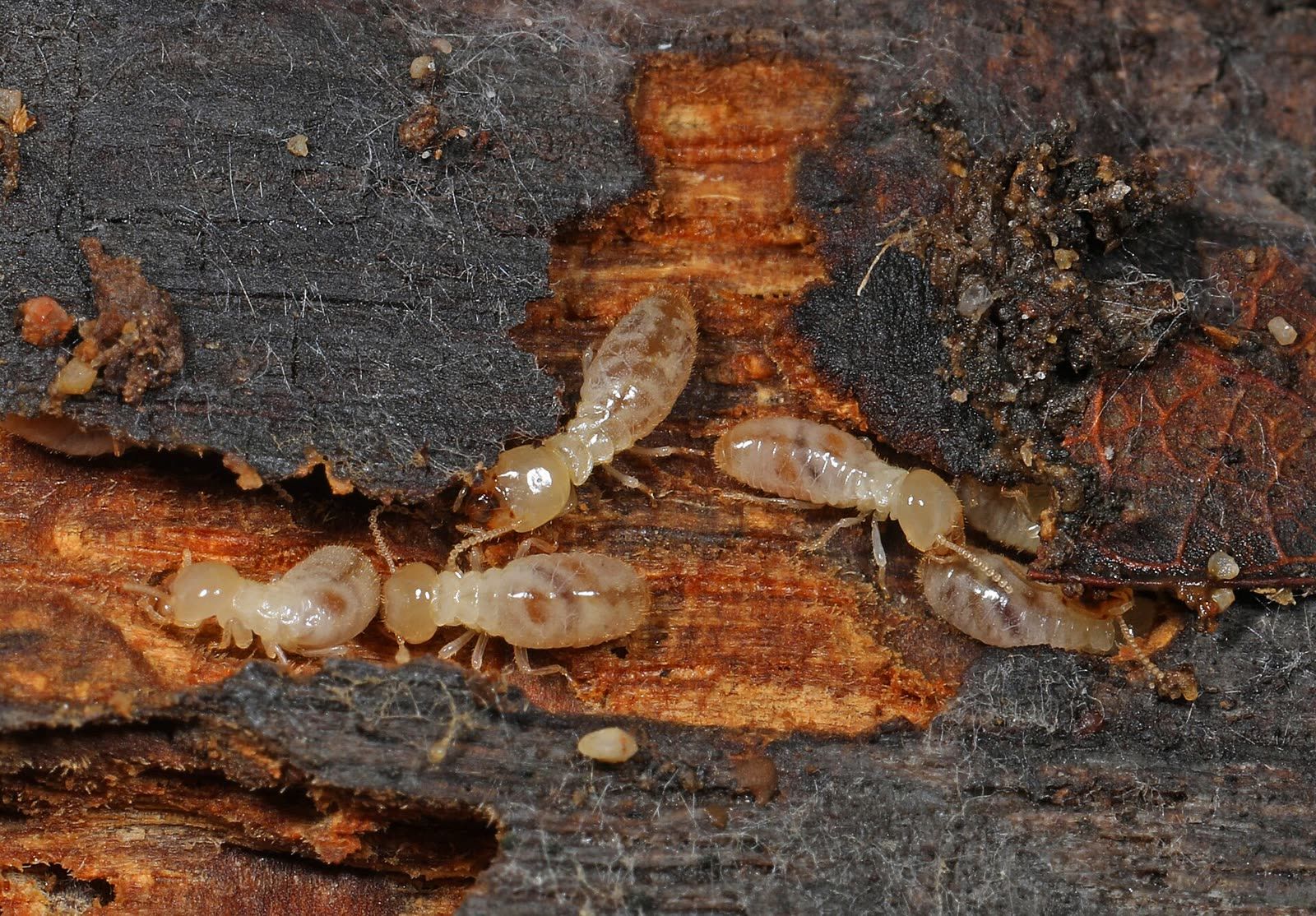

White ants are termites, not ants. The name is an old common term still standard in Australia, and the insects people find are almost always worker termites.
Are white ants termites?
White ants are actually termites and belong to an entirely different insect group than true ants. In the United States, the pale worker insects people find in soil, mulch, mud tubes, or wood touching the ground are nearly always subterranean termites.
Early observers called these pests white ants because they live in social colonies beneath the ground and have soft, light-colored bodies. Despite that historical nickname, termites are biologically distinct from ants and share a much closer evolutionary relationship with cockroaches.
The University of Florida IFAS Extension notes that worker termites handle finding and digesting food, maintaining the nest, and caring for young, while soldier termites defend the colony. The worker caste makes up the largest portion of the population, which is why people see a crowd of pale workers whenever they break open an active nest or infested timber. Drywood termites, by contrast, stay sealed inside the structural wood they eat, so homeowners rarely see them alive out in the open.
What do white ants look like?
Worker termites look like small, soft, wingless insects with a pale, off-white, or light tan body. They lack a pinched waist and move away quickly when exposed to light.
Official descriptions of worker termites align closely on their basic features. The UC Statewide IPM Program describes worker termites as wingless, soft-bodied, and light caramel in color, noting that they make up the largest contingent in most colonies and are the individuals most frequently seen in infested wood. The University of Kentucky Entomology department describes them as small, creamy-white worker termites.
Soldier termites look somewhat similar to workers, but they possess a much larger, darker, hardened head fitted with powerful jaws built for colony defense. If you want to identify soldier termites or winged swarmers, you can review my field key page for visual traits across different castes.
How do I tell a white ant from a real ant?
You can tell a worker termite from a real ant by checking the waist, the antennae, and the hardness of the body shell. The body shape gives you an immediate answer without needing specialized equipment.
The University of Kentucky Entomology department gives checks that work on wingless insects too: termites have straight antennae and a uniformly thick waist, whereas ants have elbowed antennae and a constricted waist.
| Check | Termite (white ant) | Ant |
|---|---|---|
| Antennae | Straight | Elbowed |
| Waist | Thick, uniform body | Pinched waist |
| Body | Soft and pale | Hard and usually darker |
The waist shape is the single check that works reliably without a magnifying glass. If you are examining a winged insect instead of a wingless worker, a fourth check applies to the wing proportions, which I cover in my guide on flying ants vs termites.
Are there ants that really are white?
Most ants people find in a house are dark, but a few common cases can make an ant look pale or translucent.
When people report seeing pale ants around a home, they are usually looking at one of three distinct cases:
- A newly emerged adult ant stays pale for a brief period while its outer exoskeleton hardens, but it still features a pinched waist and elbowed antennae.
- Ghost ants are tiny house pests with a dark head and pale, almost translucent legs and abdomen. They trail visibly in the open toward sugar, a behavior termite workers never display.
- White ant larvae and pupae, often referred to as ant eggs, are carried away by worker ants when an ant nest is disturbed. You can check my guide on termite larvae to see how young termites differ from ant brood.
The pinched waist settles every one of these cases instantly. If you find a large, dark ant tunneling inside damp timber, that insect is more likely a carpenter ant than a termite, which I explain in my guide comparing carpenter ants vs termites.
Where do people find white ants?
People usually find white worker termites inside covered mud tubes, inside wood in direct contact with soil, or beneath landscaping materials in the yard. Worker termites stay hidden to protect their soft bodies from drying out.
According to the US Environmental Protection Agency, termites rarely emerge from soil, mud tubes, or the food sources through which they are tunneling, so most homeowners do not realize they have them until a swarm occurs or structural damage turns up. The University of Kentucky Entomology department notes that suspect tubes may be broken open to check for live worker termites. The UC Statewide IPM Program points out that breaking open termite tubes often reveals live workers and soldiers running through the channels.
In everyday home maintenance, people run across live worker termites in a few specific places:
- A broken subterranean mud tube running up a concrete foundation wall.
- Wood pulled apart during a renovation project or deck tear-out.
- The underside of a garden board, tree stump, or landscape timber resting on damp soil.
- Deep layers of organic mulch pushed directly against a house foundation.
A pale insect walking completely in the open across a kitchen counter or crawling along an exposed baseboard is far more likely an ant. Termite workers avoid light and dry air whenever possible.
What does it mean if I find white ants near my house?
Finding worker termites in your yard shows that termites are active in the surrounding soil, but it does not automatically mean your home has a structural problem. The location of the sighting determines the true level of risk.
Workers living inside an old tree stump, a stack of firewood, or a buried landscaping tie out in the yard simply show that soil conditions suit them. The University of Kentucky Entomology department notes that termite swarms emerging from tree stumps and woodpiles out in the yard are not necessarily cause for concern and do not mean the house is infested.
Workers found inside a foundation tube or house timber point to an active infestation of the home. The University of Florida IFAS Extension reports that a single subterranean termite colony can hold between 100,000 and 1,000,000 termites and forage up to 150 feet. A small group of workers discovered in a wall represents a fraction of a much larger subterranean network feeding nearby.
The University of Kentucky Entomology department emphasizes that termites damage wood slowly, and that the damage from taking an extra day, week, or month to decide is generally inconsequential. That is time to get an inspection and compare companies. You can use my overview of signs of termites and my guide to identifying termite damage to assess what you have found.
Should I spray them?
No, you should not spray white worker termites with household insect sprays or aerosol chemicals. Spraying visible termites addresses a minor symptom while making the underlying problem harder to solve.
The US Environmental Protection Agency warns that products which only claim to kill termites are intended to kill the individual termites that directly touch the pesticide, not the whole infestation. Spraying visible worker termites with contact pesticide leaves the main colony completely unharmed beneath the soil.
Spraying also strips away the live insects an inspector needs to confirm the active species. I explain the limits of over-the-counter chemicals in my review of termite sprays, and I match the treatment to each termite group in my guide on how to get rid of termites.
What I would do if I found white ants
I have not seen your property or the insects you found, but this is what I would do:
- Catch two or three insects in a clear plastic bag or jar, or take a sharp close-up photo using your phone camera.
- Examine the waist and antennae closely, using your phone’s zoom if necessary to check for a uniform waist and straight antennae.
- Mark the exact spot where you found the insects, such as a foundation tube, garden board, or floor joist.
- Leave the mud tube, wood, or soil completely undisturbed, and do not apply any household sprays or dusts to the area.
- If the insect has a uniform waist and you found it attached to or inside part of your home, schedule a professional termite inspection and show the technician the precise location along with your preserved samples.
Sources
- Pest Notes: Subterranean and Other Termites (Publication 7415) — UC Statewide IPM Program, 2014-05. Accessed 2026-10-17.
- Termite Control: Answers for Homeowners (ENTFACT-604) — University of Kentucky Department of Entomology — Michael F. Potter, 2026-03. Accessed 2026-10-17.
- Termites: How to Identify and Control Them — US Environmental Protection Agency, 2025-10-21. Accessed 2026-10-17.
- Native Subterranean Termites: Reticulitermes flavipes, R. virginicus, R. hageni (EENY-212) — University of Florida IFAS Extension, Featured Creatures, undated. Accessed 2026-10-17.
Common questions
Are white ants and termites the same thing?
Yes. White ants is an old common name for termites, still used in Australia. The pale insects people call white ants are worker termites, which are not ants at all.
What causes white ants in a house?
Subterranean termites live in the soil and reach a house through wood touching the ground or mud tubes over the foundation. Finding pale workers inside the structure means a colony is feeding there.
What should I do if I find white ants?
Catch or photograph one, check for a pinched waist, and leave the place where you found them as it is. If the waist is thick and the place is part of the house, book a termite inspection before spraying anything.
- white ants
- termite workers
- ants vs termites
- identification
Related reading
identification
Flying Ants vs Termite Swarmers: How to Tell
A swarmer is a winged termite or ant that left its colony to breed, and a pile of them on a windowsill is what most people find first.
identification
Signs of Termites in the House: What Each Means
A sign of termites is a physical trace the insects left behind, not the insects themselves. Every sign below is worth acting on, and the two you are most likely to find, a mud tube and a pile of…
identification
What Do Termites Look Like? A Field Key
Most termites are small, soft, pale, wingless workers with straight antennae and no pinched waist; the ones people actually see are the dark winged swarmers, and soldiers look like workers with a…