 Termite Registry
identification
Termite Damage: What It Looks Like and What to Do
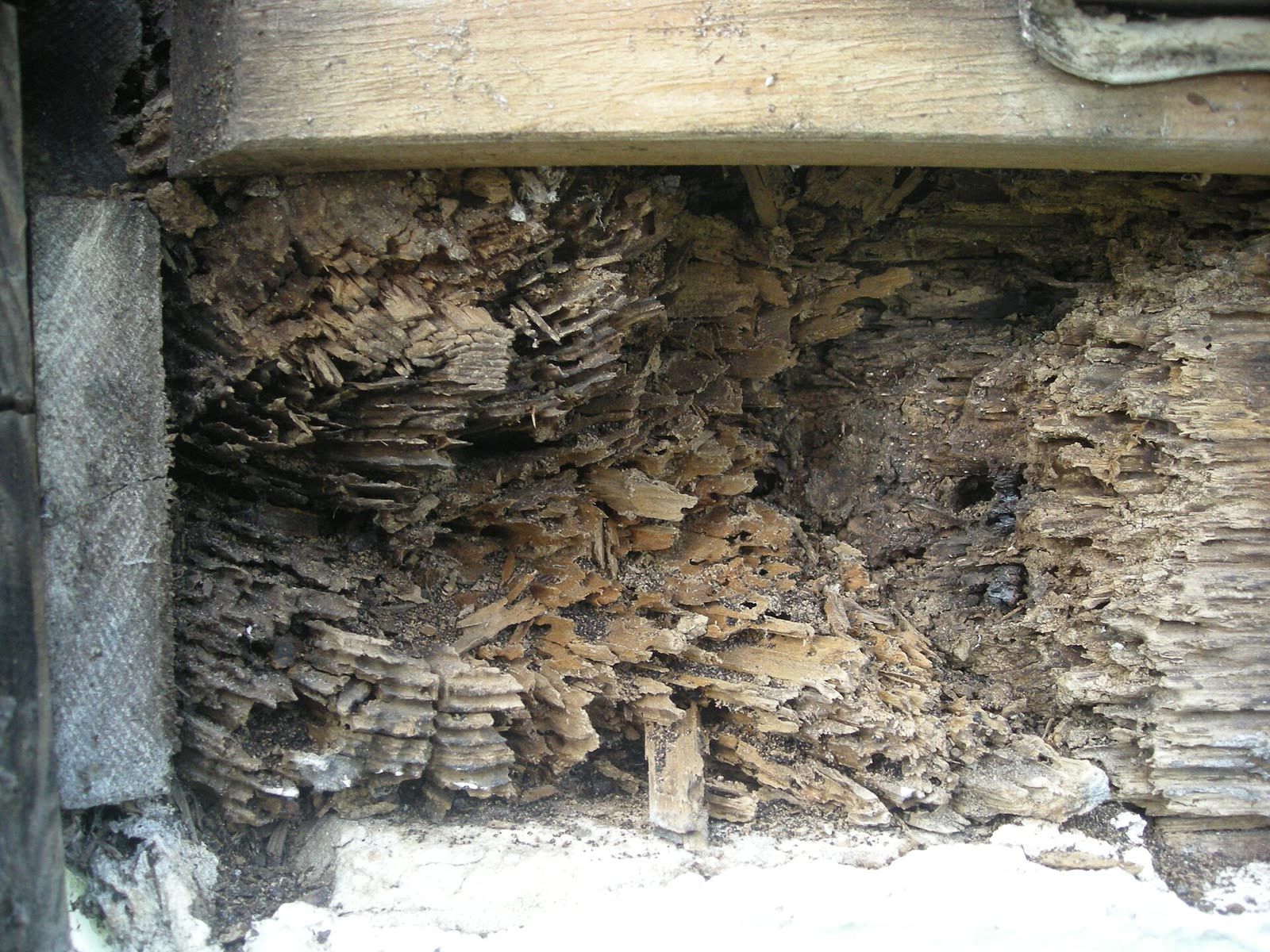

Termite damage is wood eaten out from the inside, hollowed along or across the grain and lined with soil or pellets. By the time it shows on the outer surface, the wood behind it is already thin.
What does termite damage look like?
The Kentucky Department of Entomology states that termite-damaged wood is hollowed out along the grain, with bits of dried mud or soil lining the internal feeding galleries. Wood damaged by water or other insects will not have these soil-lined channels.
Kentucky also points out that feeding can progress undetected even in exposed wood because the outer surface usually stays intact. A beam or joist can look firm from the outside while being hollowed out beneath.
The UC Statewide IPM Program notes that wood in damaged areas is typically thin at the surface and easily punctured with a knife or screwdriver. If you are early in your search and have not carved into wood yet, you can review my guide to signs of termites for broader external clues.
What does each kind of termite leave behind?
Different species leave distinct patterns inside the timber and on the surface. Before looking at the physical cavities, it helps to narrow down which termite group you have in your region.
| Termite group | Inside the wood | What shows on the surface | Read next |
|---|---|---|---|
| Subterranean termites | Texas A&M notes they usually eat only the soft springwood (each growth ring’s softer layer), leaving alternating layers of damaged and undamaged wood. Their galleries contain soil. | Mud tubes, darkened or blistered wood, and tiny holes in drywall with soil around the edges. | My subterranean termites page |
| Drywood termites | Texas A&M states they eat both springwood and summerwood (the harder layer), giving galleries a smooth, sculptured look. Galleries contain fecal pellets. | Kick-out holes and piles of hard pellets. UC IPM notes the holes are under 2 mm across and the six-sided pellets are diagnostic for drywood termites. | My drywood termites page |
| Formosan termites | Texas A&M states they eat summerwood like drywood termites, but their galleries contain no fecal pellets. | Similar to subterranean termites, showing surface blistering and soil line traces because they attack from the ground. | My Formosan termites page |
This table focuses on where each termite group leaves its damage and what you see from the outside. If you have carved open a piece of wood and want to check it against carpenter ant activity, I built a dedicated key in my termite vs carpenter ant damage guide.
What does termite damage look like in walls, floors, and furniture?
Termites affect structural framing, wallboard, trim, and household furnishings in different ways depending on the material.
Framing and structural wood
The UC Statewide IPM Program notes that damage to structural wood members often shows up as darkening or blistering, with the outer surface becoming paper-thin. When you press against a damaged stud or joist, a flat tool breaks right through into hollow cavities.
Drywall and plaster
Kentucky states that termites occasionally bore tiny holes through drywall or plaster, leaving bits of soil around the margin. Kentucky also notes that rippled or sunken traces behind wall coverings can indicate termites tunneling underneath. If you spot raised lines on plasterboard, you may be looking at termite damage on drywall where insects are traveling just under the paper face. Observing these channels helps identify termite damage in walls before structural timbers fail.
Paint and trim
UF/IFAS Extension notes that while drywood termite infestations typically remain inside the wood, external signs include blistering or peeling of thin surface wood or paint. You may also notice tiny kick-out holes, usually 1 to 2 mm across, where drywood termites push out fecal pellets.
Floors
Damage underneath floorboards usually reveals itself only when floor coverings are removed or when a board noticeably gives underfoot. Kentucky lists floor coverings among the common obstructions that hide active infestations from view.
Furniture
Texas A&M advises checking used and antique furniture for holes or drywood termite pellets. Inspect underneath the item, inside drawers, and along interior horizontal surfaces before bringing older wooden furniture into your home.
Why does termite damage stay hidden?
UF/IFAS Extension notes that subterranean infestations are usually not readily visible, and damage is often uncovered only during remodeling or when mud tubes appear. Because these insects feed internally, structural wood can lose strength while looking intact.
The UC Statewide IPM Program states that most homeowners remain unaware of a subterranean termite problem until a major finding occurs. These findings include real estate transaction inspections, wall demolitions during renovations, shelter tubes appearing on interior walls, or swarms of flying insects inside kitchens and bathrooms.
How do I check wood for termite damage?
The US Environmental Protection Agency recommends probing exposed wood for hollow spots using a flathead screwdriver or similar tool. Firm pressure will break through wood that has been hollowed out from within.
- Press exposed wood: Walk along exposed framing in accessible areas and press a flathead tool into suspicious spots.
- Look inside any break: Check whether the interior cavity contains soil, hard sand-like pellets, or clean hollow channels.
- Check surface openings: Look for tiny kick-out holes on wood surfaces and check the floor or shelves directly below them for accumulated pellets.
- Examine mud structures: Search along concrete foundations or drywall for dirt tubes, which I explain further in my guide to mud tubes.
- Photograph everything: Take clear, close-up photos of any exposed galleries, pellets, or damaged edges before touching or clearing the area.
Keep your inspection safe and simple. Do not cut open intact walls, rip up floorboards, or crawl into risky crawlspaces to hunt for hidden activity.
Is it termite damage, water damage, or something else?
Kentucky notes that wood damaged by moisture or carpenter ants will not have the mud-lined galleries typical of subterranean termites. Telling these causes apart helps prevent treating the wrong problem.
When weighing termite damage vs water damage, remember that wet, rotted wood becomes soft, spongy, and crumbles into chunks without distinct feeding galleries. Rot also cracks across the grain, whereas subterranean termites eat along the grain.
Powderpost beetles produce fine, flour-like dust rather than hard pellets, leaving small round exit holes scattered across the surface. If you find loose material under wood, my termite frass identification guide explains how to spot the difference between beetle powder and drywood pellets. If you suspect ant activity inside an opened board, refer to my termite vs carpenter ant damage page.
How serious is termite damage?
Kentucky emphasizes that termites damage wood slowly. Taking an extra day, week, or month to research your options makes virtually no difference to the total amount of structural damage.
The UC Statewide IPM Program advises that regular inspections every 3 to 5 years help catch infestations before they cause extensive harm.
When asking if a house with termites can be saved, remember that severity is a construction question rather than a pest question. A North Carolina Department of Agriculture buyer’s guide notes that pest control operators are ordinarily neither prepared nor qualified to evaluate the extent of damage to a structure, and a building expert should make the necessary repairs. North Carolina’s guide adds that just as a person will buy a used car with a few dents, a homeowner or lender must be willing to accept some wood-destroying insect damage in an older home.
On official inspection reports, Form NPMA-33 explicitly states that it is not a structural damage report. The form notes that if Box B is checked, some degree of damage, including hidden damage, may be present, and recommends consulting a qualified structural professional. Whether a piece of framing needs reinforcing or replacing is the job of a contractor or structural engineer.
Can termite damage be repaired?
Yes, termite damage can be repaired once active insects are gone. The University of Arizona Cooperative Extension notes that where a drywood termite infestation is limited, you can remove and replace damaged wood, preferably with pressure-treated wood that protects against both termites and decay.
The correct order of operations is essential: get the active colony eliminated first, then perform structural repairs. Fixing wood while live termites remain inside invites immediate damage to the new lumber. If you carry or are considering a service agreement, my guide on repair bonds versus retreat-only warranties details which contracts pay for timber replacement and which only cover re-treatment.
What should I do if I find termite damage?
Finding hollow wood can feel alarming, but taking structured steps gives you complete control over the process.
- Stay calm: Remember Kentucky’s guidance that termites move slowly. You have plenty of time to choose the right provider.
- Document the area: Take photos of the wood, any mud lines, and any pellets or insect bodies present.
- Do not spray retail chemicals: Applying household sprays disrupts termite trails, driving insects into adjacent wall voids without killing the colony.
- Book a professional inspection: Schedule a thorough evaluation with a qualified professional through my termite inspection service directory.
If you are buying a property and found damage listed on a real estate report, see my guide on handling a failed termite inspection. If you are still unsure whether the damaged wood you spotted is actually from termites, my termite scan tool helps walk through what you found.
My recommendation on termite damage
When you spot termite damage on a baseboard or joist, the damage inside the wood is usually older and more extensive than what shows on the surface. However, finding damaged lumber is rarely an emergency. Termites chew through structural fibers slowly, so a few days spent choosing a company will not change much.
I have not seen your house, so I cannot tell you if a specific stud or joist needs immediate structural support. My advice is to follow a strict two-step approach: first, hire a licensed professional through my termite inspection page to confirm the species and eliminate the active colony. Once treatment is complete, bring in a qualified general contractor or structural engineer to evaluate the timber and handle any necessary repairs.
Sources
- Termite Control: Answers for Homeowners (ENTFACT-604) — University of Kentucky Department of Entomology — Michael F. Potter, 2026-03. Accessed 2026-10-11.
- Pest Notes: Subterranean and Other Termites (Publication 7415) — UC Statewide IPM Program, 2014-05. Accessed 2026-10-11.
- Drywood Termites (E-366) — Texas Cooperative Extension — Roger E. Gold, Harry N. Howell Jr., Grady J. Glenn and Kimberly M. Brown, 2005-12. Accessed 2026-10-11.
- West Indian Drywood Termite, Cryptotermes brevis (EENY-079) — University of Florida IFAS Extension, Featured Creatures, undated. Accessed 2026-10-11.
- Pest Notes: Drywood Termites (Publication 7440) — UC Statewide IPM Program, 2014. Accessed 2026-10-11.
- Native Subterranean Termites: Reticulitermes flavipes, R. virginicus, R. hageni (EENY-212) — University of Florida IFAS Extension, Featured Creatures, undated. Accessed 2026-10-11.
- Termites: How to Identify and Control Them — US Environmental Protection Agency, 2025-10-21. Accessed 2026-10-11.
- Drywood Termites (AZ1232) — University of Arizona Cooperative Extension — Dawn H. Gouge, Carl Olson, Paul Baker, 2009-05. Accessed 2026-10-11.
- A Home Buyer’s Guide for Wood Destroying Insect Information Report (WDIR) — North Carolina Department of Agriculture & Consumer Services, Structural Pest Control Division, undated. Accessed 2026-10-11.
- Form NPMA-33: Wood Destroying Insect Inspection Report (7/01/19) — National Pest Management Association, hosted by US Department of Housing and Urban Development, 2019-07-01. Accessed 2026-10-11.
Common questions
Can a house with termite damage be saved?
Usually, yes. Termites damage wood slowly, and most damage is in pieces of wood that can be treated around and replaced. How much has to be replaced is a judgment for a contractor or structural engineer, not a pest inspector. Get the termites treated first, then have the damaged wood assessed and repaired.
How do I tell old termite damage from active termites?
You often cannot tell from the damage alone. Old galleries look much the same as new ones. Live termites in the wood, fresh mud tubes, or new pellets point to an active infestation; their absence does not prove the termites are gone. An inspection is the way to settle it.
- termite damage
- identification
- wood damage
- drywall
- inspection
Related reading
identification
Signs of Termites in the House: What Each Means
A sign of termites is a physical trace the insects left behind, not the insects themselves. Every sign below is worth acting on, and the two you are most likely to find, a mud tube and a pile of…
identification
Subterranean vs Drywood Termites: Which You Have
Subterranean termites nest in the soil and reach your wood through mud tubes; drywood termites live entirely inside dry wood and touch no soil at all.
identification
Termite vs Carpenter Ant Damage: Reading the Wood
Opening a wall during a remodel or pulling back trim often reveals damaged timber with no insect anywhere in it. What sits inside the galleries names the insect, and how smooth the walls are does not…